Sources and trust
How-to guideAI Article Writer With References: Sources Readers Can Click and Check
Why references matter more for AI-written articles, how PixelClaw grounds every draft in the sources it researched, and what references can and cannot prove.
On this page▸
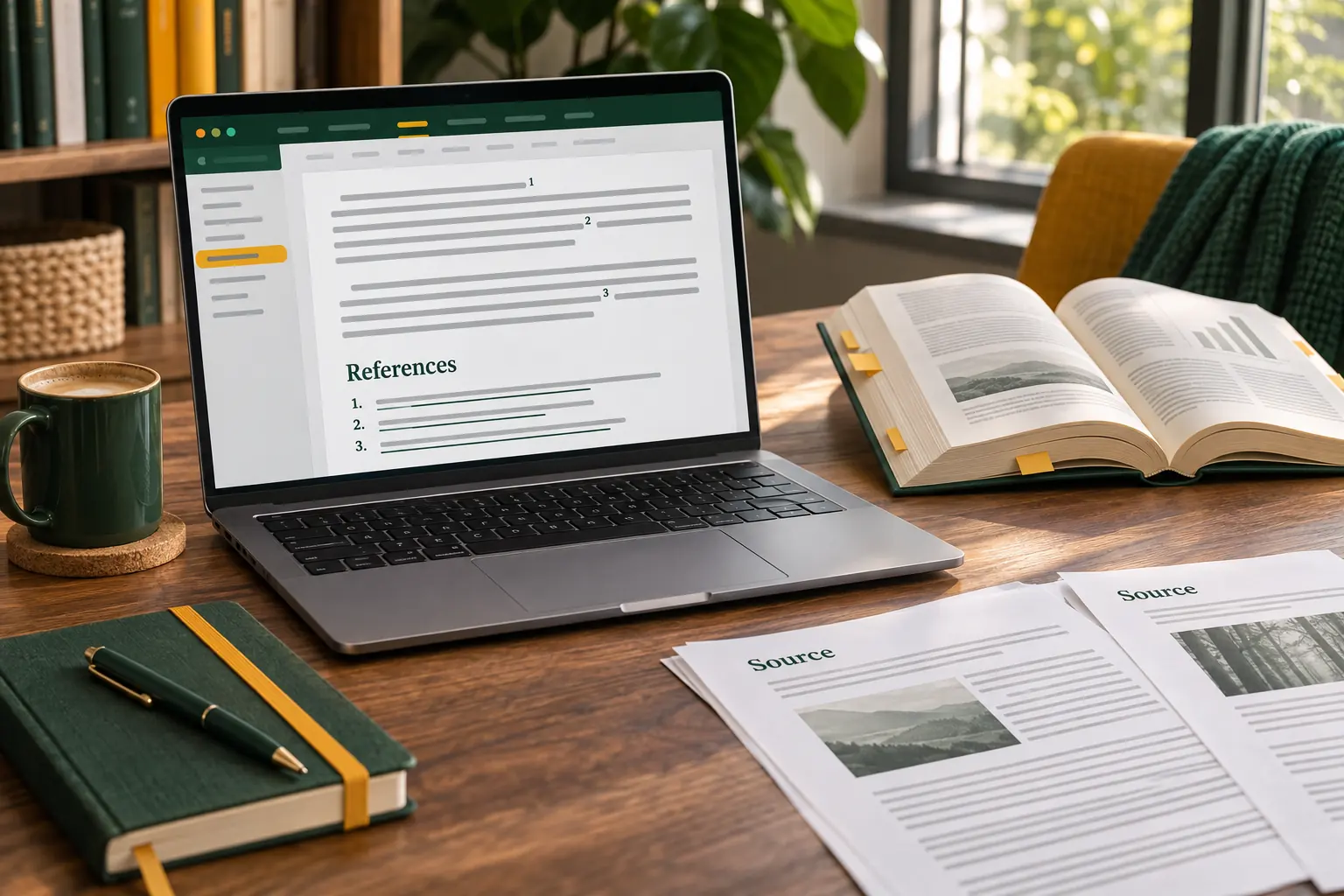
An AI article writer with references researches the topic before drafting and keeps the sources it used attached to the article, so readers and editors can check each claim. PixelClaw reads the ranking pages first, writes from them, names sources in the text and lists them at the end, pinned when you publish.
Why references matter more for AI-written articles
A human expert's article earns trust from the expert. An AI-written article has no such reputation to lean on, so it has to earn trust another way: by showing where its facts came from.
References do that job for three audiences at once. Readers can click through and check. Editors can verify a draft in minutes instead of researching it again. And AI systems that decide which pages to quote, from Google's AI Overviews to Perplexity, favour passages backed by sources; the GEO research paper found citing sources was among the most effective ways to raise a page's visibility in AI answers.
An AI article writer with references is not a luxury feature. It is what makes AI-written articles defensible.
How PixelClaw grounds every draft in sources
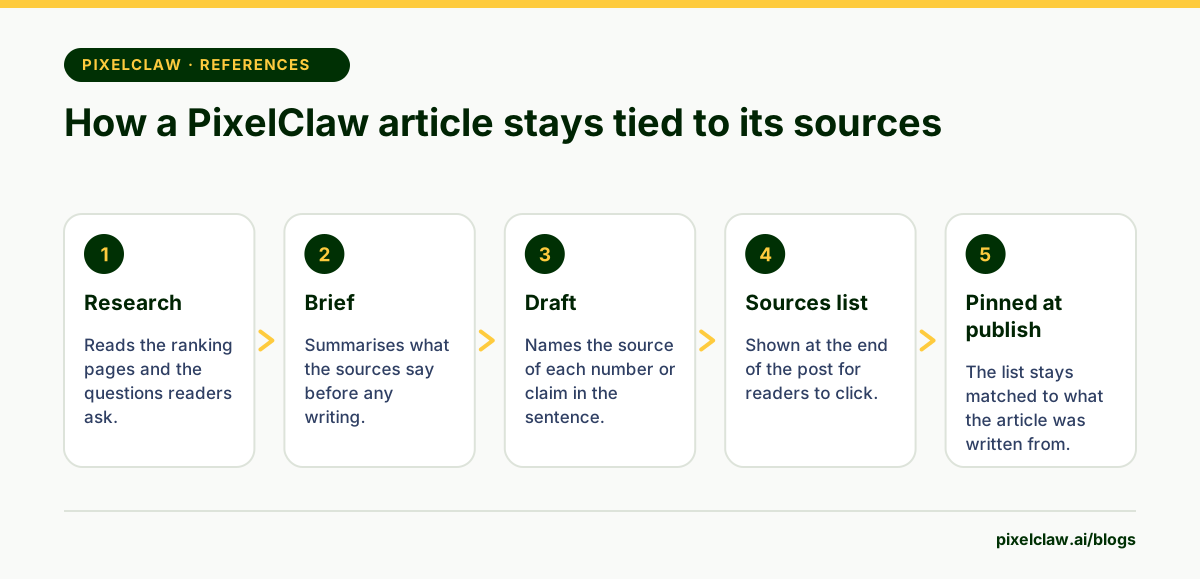
Research comes first, always. For each topic PixelClaw reads the pages that rank and collects the questions readers ask; at standard and deep research depth it also writes a research brief before any outline exists. The draft is written from that research, and the writing rules ask it to name the source of each number or claim in the sentence that uses it.
The sources the research found stay attached to the post. They appear as a sources list at the end of the article, and when the post is published that list is pinned, so later edits to the research never quietly change what readers see. A blog-wide switch decides whether the list is shown, and each post can override it.
What references can and cannot prove
A reference shows where a claim came from. It does not prove the claim is right. The source may be out of date, the model may have read it carelessly, or two sources may disagree and the draft may have picked the wrong one.
So the editing habit stays the same: read the claims that matter, especially prices, numbers, dates and anything about what a product or law does, and click the reference behind each. With references attached, that check takes minutes rather than an hour, which is the real saving.
No AI article writer, ours included, can guarantee that every sentence is true. Be wary of any that claims to.
A practical rule: the more a claim could cost a reader if it were wrong, the closer you check its reference. A wrong date in a history aside is embarrassing. A wrong price, dosage, deadline or legal requirement can cost someone money or worse, so those get a click-through every time.
Good references and weak ones
Prefer primary sources. A vendor's own pricing page beats a review site's summary of it. A regulator's guidance beats a news story about it. The original study beats a blog post quoting the study. Our own vendor comparisons, for example, link each price to the vendor's own pricing page and say when it was read.
Watch for references that only look like evidence: a link to a homepage rather than the page with the fact, a source that is itself unsourced, or a citation to a page that says something different from the claim. Those are worse than no reference, because they give false confidence.
- Link the exact page that states the fact, not the site's homepage.
- Prefer the original source over someone else's summary of it.
- Note when time-sensitive facts such as prices were checked.
- Replace references to pages that have gone missing or changed.
Adding your own sources and knowledge
The best references for your articles are often your own: your price list, your product documentation, your past project results. PixelClaw lets you add files, pages and notes to a knowledge base and builds a business profile from your website, and drafts use both alongside the web research.
That is how an AI article writer with references can cite your facts rather than a competitor's. It also stops the most embarrassing kind of error: an article on your own blog getting your own prices wrong. For the related question of keeping AI drafts accurate, read source-grounded AI writing and our guide to AIO blogs.
- References let readers, editors and AI systems check an article's claims instead of taking them on trust.
- PixelClaw researches before writing, names sources in the text and keeps a sources list on every post.
- The sources list is pinned at publish, so it always matches what the article was written from.
- A reference shows where a claim came from; it does not prove the claim is right, so you still read them.
- Primary sources beat summaries: the vendor's page, the regulator's guidance, the original study.
Frequently Asked Questions
Are references shown as links or footnotes?+
Both, in a sense. The draft names its sources in the sentences that use them, and the full list appears at the end of the post as clickable links, which readers and search engines can follow without scrolling back through the article.
Does an AI article writer with references prevent hallucinations?+
It reduces them, because the draft is written from sources it actually read rather than from the model's memory. It cannot remove them entirely; a model can still misread a source, which is why an editor checks the claims that matter.
Can I hide the sources list on a post?+
Yes. A switch in your blog's settings shows or hides the research sources at the end of each post, with a default for the whole blog and a choice per post.
Can I add my own sources?+
Yes. Add documents and pages to your knowledge base, and keep your business profile current, and drafts draw on them alongside the web research. You can also add or edit links in the editor before publishing.
How many references should an article have?+
One for every claim a reader might doubt: numbers, prices, dates and statements about what a product or rule does. PixelClaw's score asks for at least two, as a floor rather than a target.
Sources
- Creating helpful, reliable, people-first content — Google Search Central
- GEO: Generative Engine Optimization — Aggarwal et al. (Found that citing sources was among the edits that most raised visibility in AI-generated answers.)
- Search Quality Rater Guidelines — Google
Built & scored using PixelClaw.ai
More from this blog
Continue exploring autoblogging architecture, AI blog writing, and SEO / AEO / GEO playbooks.
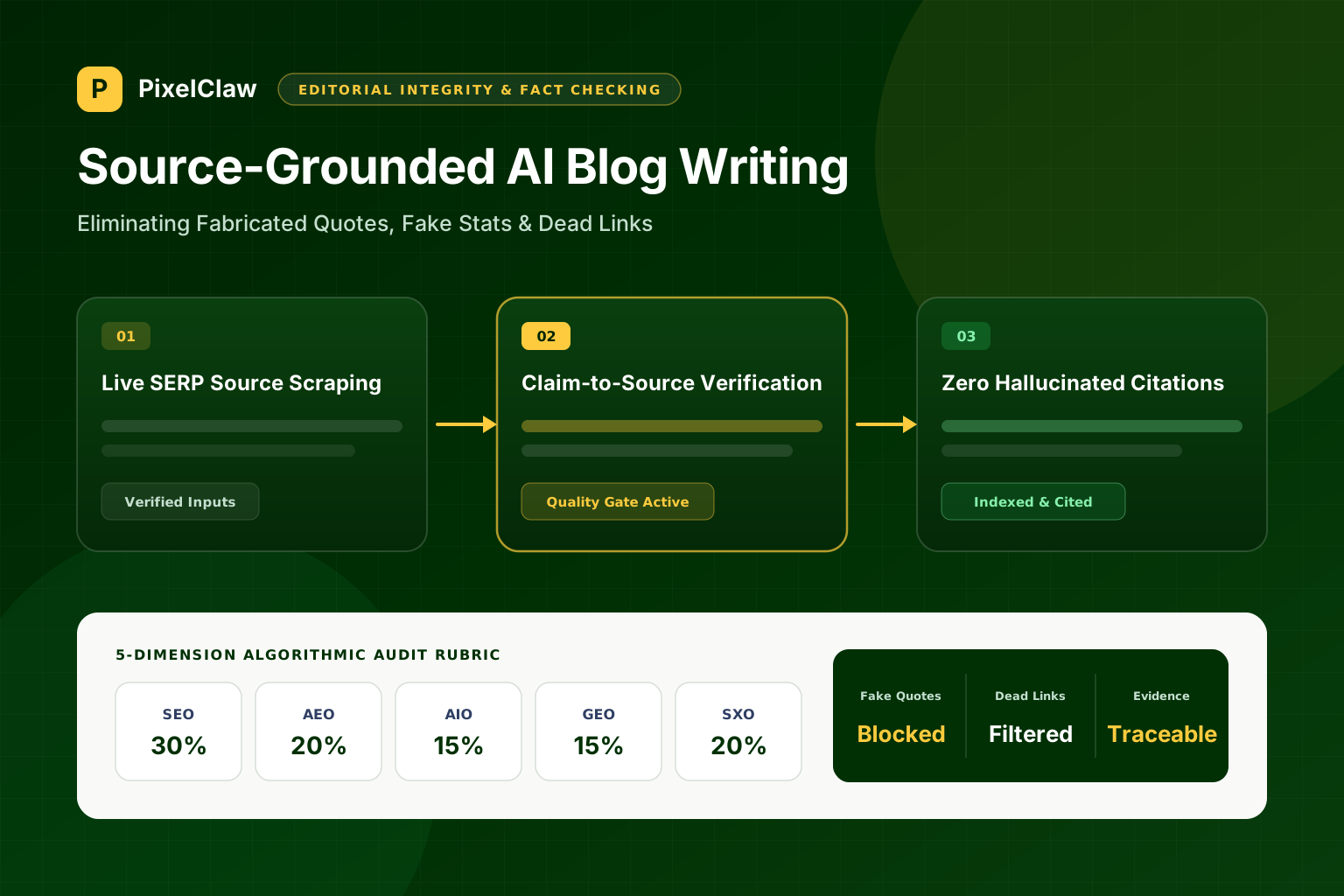
Source-Grounded AI Writing: How to Reduce Hallucinated Stats and Dead Links in Automated Blogs
Why raw language models invent fake percentages, nonexistent studies, and 404 URLs—and how source-grounded AI writing reduces those risks before editorial review.
Dr. Arthur Pendelton
Compliance & Editorial Director

AIO Blogs: Writing Posts That AI Systems Trust, Attribute and Recommend
AI optimization for bloggers: the authorship, sourcing and accuracy signals that decide whether Google's AI Overviews and chat assistants use your post or someone else's.
PixelClaw Editorial Team
Product and search team
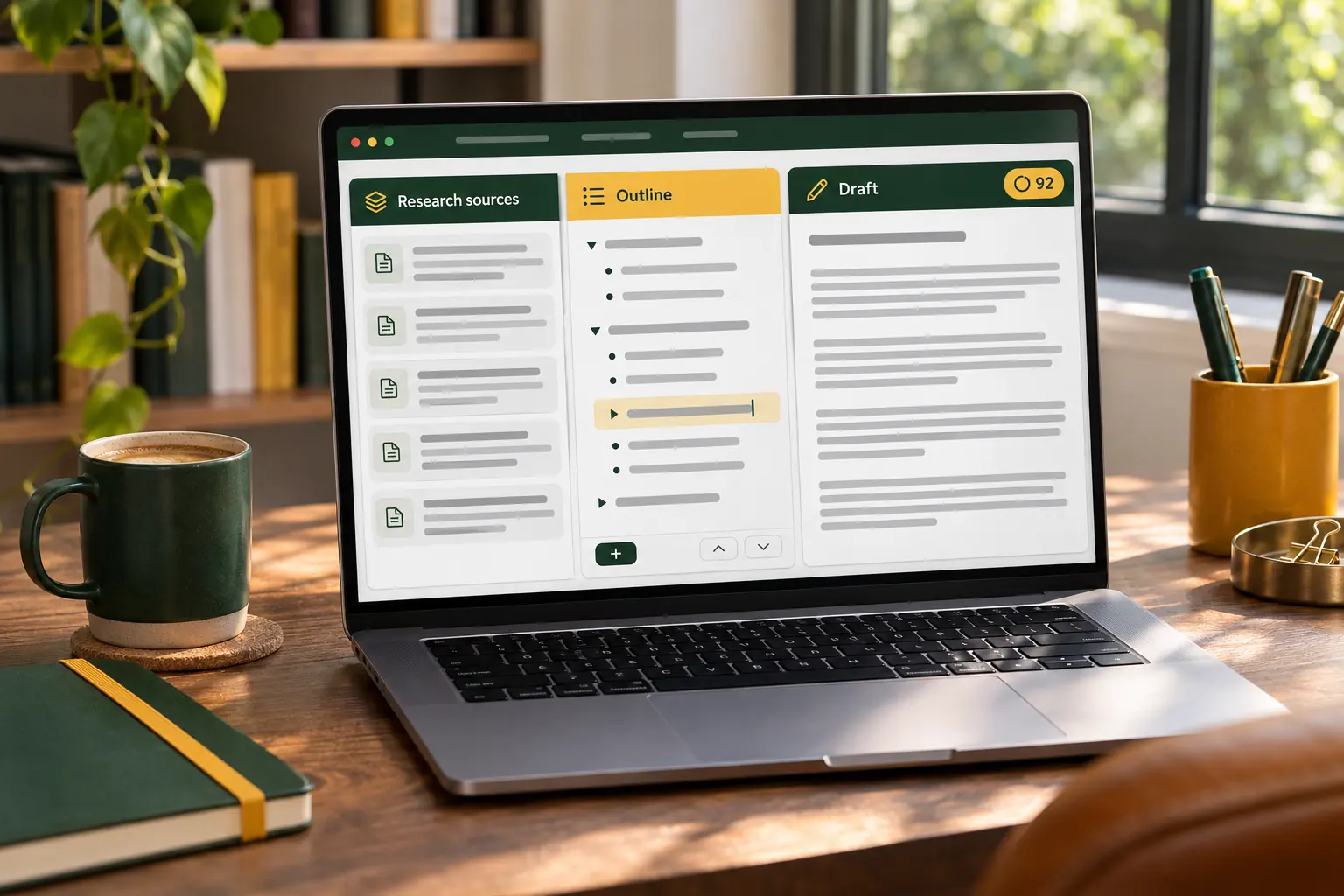
An AI Article Writer That Researches First: Outline, Draft and Score in One Place
How PixelClaw's AI article writer works: research before writing, an outline you control, a draft shaped to the kind of article the search needs, and a score before anything goes live.
PixelClaw Editorial Team
Product and search team