How-to guide
How-to guideHow to Generate SEO Posts Automatically, and Keep Them Worth Reading
What an automatic SEO post generator must get right on every draft, how PixelClaw's polish pass fixes the gaps before you see it, and the checks that keep automatic posts useful.

On this page▸
To generate SEO posts automatically, give an AI writer a list of searched questions and let it research the ranking pages, write a structured draft with the keyword in the right places, check the draft against SEO rules, fix what fails and publish on schedule. The automation handles structure; you protect accuracy.
What generating SEO posts automatically should mean
"Automatic" covers a wide range. At one end is a prompt that returns 1,500 words with a keyword sprinkled in, which you then format, link, illustrate and publish yourself. At the other is a system that takes a question, researches it, writes it, checks it against a full SEO checklist, fixes what fails and publishes it with everything search engines need. Only the second saves real time.
The useful definition: you supply the question and the judgment, the system supplies everything mechanical. If you are still pasting drafts into a CMS and writing alt text by hand, the post was not generated automatically; it was typed automatically.
The SEO elements an automatic generator must get right
Google's SEO Starter Guide still describes the basics, and every one of them can be automated. A title of 60 characters or fewer with the keyword near the start. A description of 120 to 155 characters. The keyword in the opening paragraph and in a heading. One main heading, with H2s and H3s in order. A short, readable web address.
Then the parts that often get skipped: alt text and saved sizes for every image, links to two to five related posts, sources for the claims, and structured data that tells search engines this is an article, who published it and what questions it answers. PixelClaw checks all of these on every draft, and its hosted blog adds the structured data, sitemap entry and llms.txt line on publish.
How PixelClaw's polish pass fixes SEO gaps before you see the draft
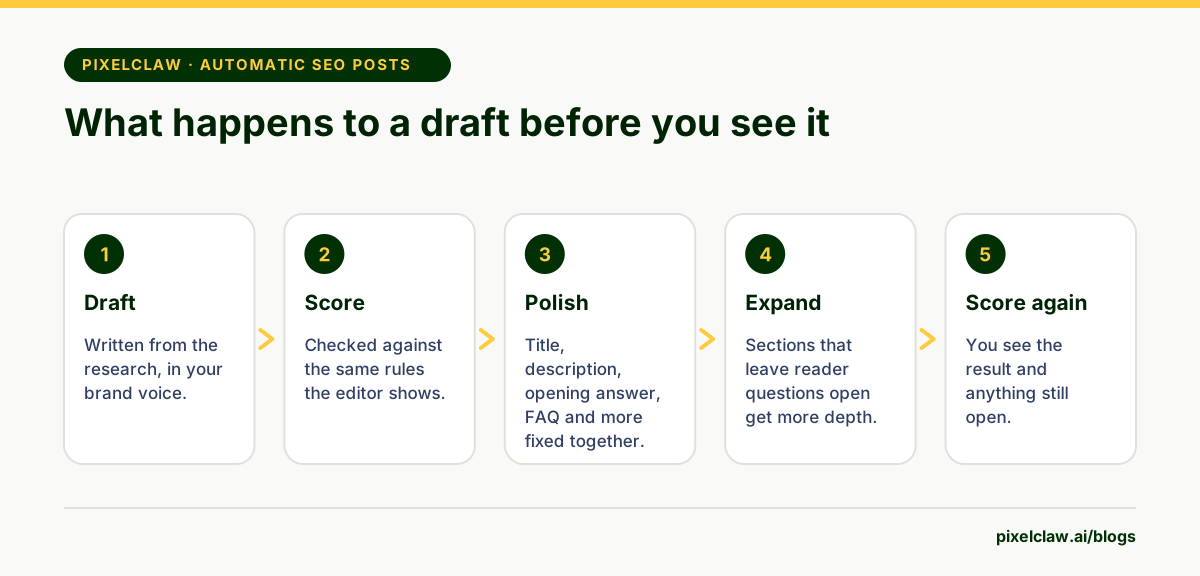
A first draft from any AI writer misses something: a title two words too long, no FAQ, an opening that takes 90 words to answer. PixelClaw does not hand you that draft and a list of problems. It scores the draft with the same checks the editor shows, then a polish pass repairs what failed.
One model call fixes the small things together: the title, the description, the opening answer, a heading that should carry the keyword, key takeaways, the FAQ, a missing list and image descriptions. Where the post leaves a reader question unanswered, the relevant section is expanded. Then the draft is scored again. Nothing in the polish pass invents a source; sources only come from the research.
Internal links and indexing, automatically
Internal links are where automatic SEO posts often fall down. A post published with no links to the rest of the blog is hard for search engines to place and easy for readers to leave. PixelClaw's score asks for links to at least two related posts, and a one-click fix adds them from your published posts.
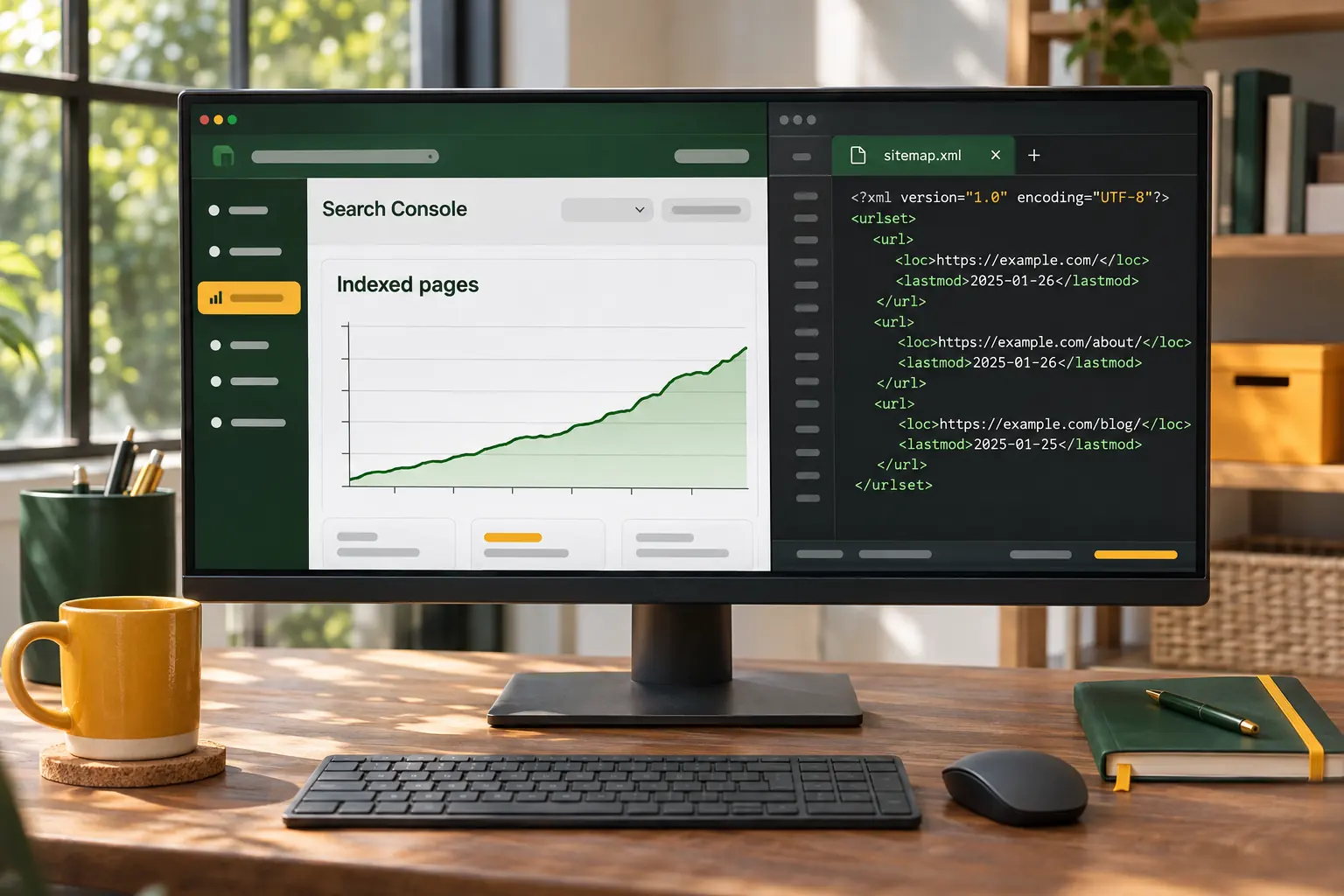
Indexing is the other half. A post Google has not found cannot rank. Every PixelClaw blog updates its sitemap the moment a post is published. Paid plans also ping IndexNow, which tells Bing and other participating search engines about the new page right away, and can send the sitemap to Google through your Search Console connection.
Keeping automatic SEO posts worth reading
Automation gets the checklist right. It does not get the point of view right on its own, and it cannot tell a true claim from a false one. Three habits fill that gap.
Feed it specifics. A business profile built from your website, a brand voice with an example paragraph and a few knowledge files mean drafts talk about your real services and prices instead of generic ones. Read the first posts from any new topic cluster in full, and fix the inputs when something is off. And check every number before a post goes live, or keep Autopilot in approval mode until you trust the drafts.
- Write topics as the exact questions readers type.
- Keep a business profile and brand voice up to date.
- Read the first posts of every new cluster in full.
- Check prices, names and dates before approving.
- Refresh posts that lose readers instead of only adding new ones.
Measuring whether your automatic SEO posts work
Count outcomes, not output. After a month, look at each post's impressions and clicks in Search Console. Posts with impressions but few clicks need a better title. Posts stuck on page two need the section the top results have and they don't. Posts with nothing at all after two months may be targeting a question nobody asks.
PixelClaw brings Search Console data into the posts and lists the ones losing readers, so this review takes minutes. For the full checklist behind every SEO post, read how to write SEO blogs.
- An automatic SEO post generator must handle research, keyword placement, titles, links, images and schema on every draft.
- PixelClaw scores each draft and runs a polish pass that fixes failed checks before you see it.
- Internal links and indexing pings are part of SEO, and both can be automatic.
- Automation cannot check whether a claim is true; that stays with you.
- Judge automatic posts by Search Console impressions and clicks, not by how many were published.
Frequently Asked Questions
Can AI generate SEO posts that actually rank?+
Yes, when each post answers a real question better than what already ranks. Automatic generation gets the structure and the SEO checklist right every time; the ranking still depends on usefulness, competition and your site's standing.
What SEO elements should be automatic?+
The title and description lengths, keyword placement, heading order, the web address, image alt text and sizes, structured data, internal links, the sitemap and indexing pings. None of these need a person once the system is set up.
Does Google penalize automatically generated SEO posts?+
Google penalizes content made mainly to manipulate rankings, however it is produced, not automation itself. Publish at a sensible pace, answer real questions and cite sources, and automatically generated posts are treated like any others.
How many automatic SEO posts should I publish a week?+
Two to seven suits most business blogs. PixelClaw's Autopilot never publishes more than 14 a week on one blog, whatever the plan, because higher volumes read as content made to rank.
Sources
- Search Engine Optimization (SEO) Starter Guide — Google Search Central
- Introduction to structured data markup in Google Search — Google Search Central
- IndexNow documentation — IndexNow
Built & scored using PixelClaw.ai
More from this blog
Continue exploring autoblogging architecture, AI blog writing, and SEO / AEO / GEO playbooks.

SEO Blogs That Earn Clicks in 2026: How to Plan, Write and Publish Them
The on-page checklist, the length question, internal links and the technical basics, written for people who want their blog posts found rather than admired.
PixelClaw Editorial Team
Product and search team

A Content Optimization Tool That Scores SEO, AEO, AIO, GEO and SXO Together
Most content optimization tools grade one thing: keywords. PixelClaw scores every post in five areas, explains each failed check in plain words, and fixes most of them in one click.
PixelClaw Editorial Team
Product and search team
Google Indexing Tool: Get New Posts Found With Sitemaps, IndexNow and the Indexing API
What actually gets a new blog post into Google and Bing, what each indexing tool does and doesn't do, and how PixelClaw handles it for every post you publish.
PixelClaw Editorial Team
Product and search team