AEO blogs
AI search guideAEO Blogs: How to Write Posts That Answer Engines Quote Word for Word
Answer engine optimization for bloggers: how to write the 40-to-60-word answer that featured snippets, voice assistants and AI chats lift straight into their replies.
On this page▸
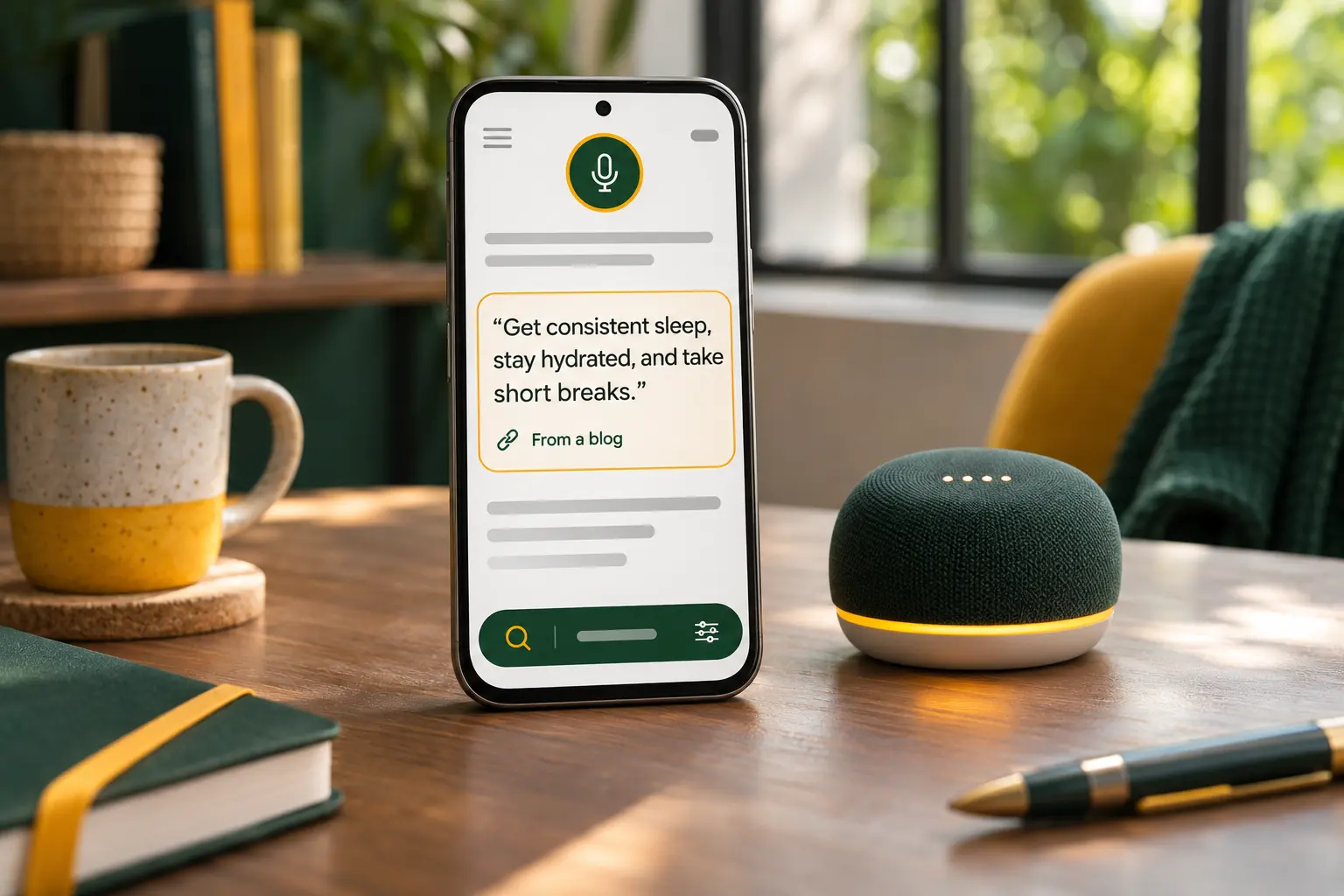
AEO blogs are posts written so answer engines can lift a passage and quote it: a featured snippet, a voice assistant reply, a ChatGPT or Perplexity answer. They lead with a 40 to 60 word answer, phrase headings as the questions people ask, and keep each answer complete on its own.
What answer engine optimization means for a blog
Answer engine optimization (AEO) is writing so that a machine can take one passage from your post and use it as the answer to someone's question. The machine might be Google's featured snippet, a People Also Ask box, Siri or Alexa reading a reply aloud, or ChatGPT and Perplexity summarising the web.
For a blog, AEO changes the shape of a post more than its subject. The answer moves to the top. Headings become questions. Each section opens with its point instead of building up to it. None of that hurts human readers; most of them wanted the answer first anyway.
Google's own notes on featured snippets say there is no special markup that guarantees one. What you control is whether a clean, quotable answer exists on the page.
AEO blogs matter more each year because more questions end without a click on a list of links. Someone asks a smart speaker, reads an AI Overview or gets a summary inside a chat window, and the only brand they hear about is the one whose sentence was used. If that sentence comes from your post, you are the expert in that moment. If it comes from a rival, your carefully ranked page may never be seen.
The anatomy of a quotable answer
A quotable answer does four things in about 50 words. It names the subject of the question in its first words, gives the answer plainly, adds the one qualifier that matters, and stops.
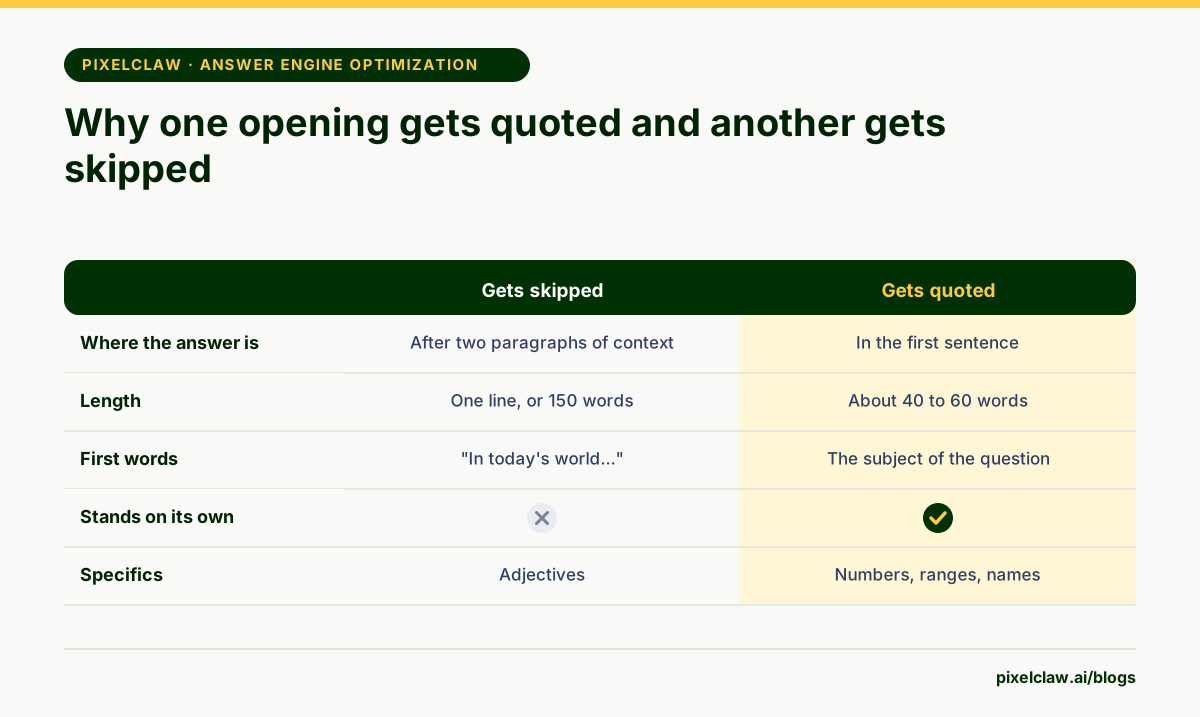
Compare two openings for "how often should you water a snake plant". The weak one starts with how popular snake plants are. The strong one starts: "Water a snake plant every two to three weeks, letting the soil dry out completely between waterings. In winter, once a month is enough." The second can be read aloud by a voice assistant and still make sense.
The table shows the difference in the habits behind each.
Turn headings into the questions people ask
Answer engines match questions to passages. If your heading is the question, and the first sentence under it is the answer, the match is easy. If your heading is "Considerations" the engine has to guess.
Find the questions in three places. Google's People Also Ask box for your keyword. The queries in Search Console that bring people to the post. And the research itself: before PixelClaw writes a post it collects up to eight questions readers ask about the topic, and its score checks that the post answers most of them.
Not every heading has to end in a question mark. "Watering a snake plant in winter" works as well as a question because it says exactly what the section answers.
AEO for voice assistants and AI chat
Voice assistants are the strictest answer engines. They read one answer aloud, with no list of blue links underneath, so they favour short, plain sentences that sound natural when spoken. Numbers should be written the way people say them, and the answer should not depend on a table or image the listener cannot see.
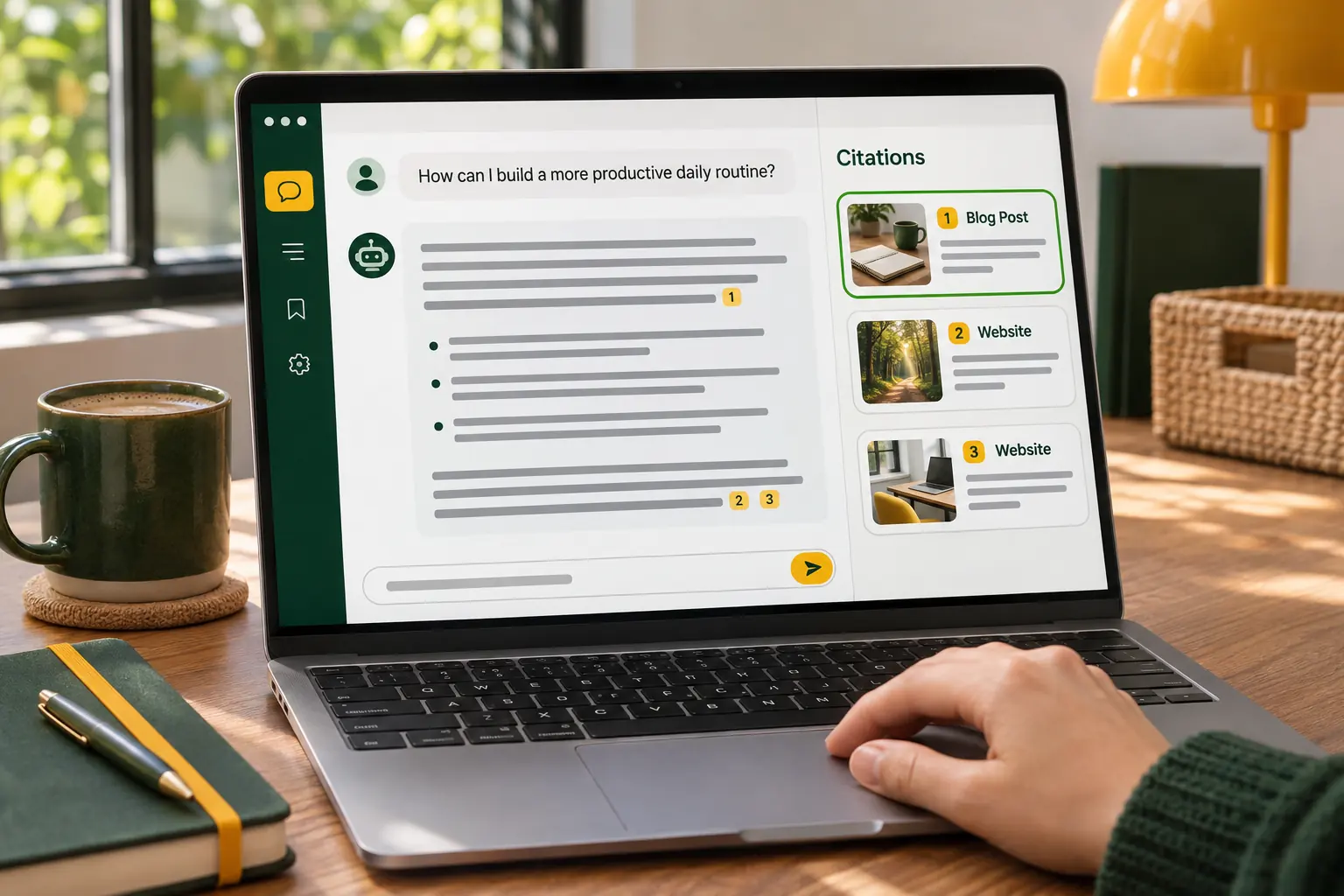
AI chat assistants are more forgiving about length but stricter about trust. When ChatGPT, Perplexity or Gemini browse the web for an answer, they pull passages from several pages and often show which pages they used. Passages that state a fact clearly, name where it came from and keep to one idea are easier for them to use and to credit.
The practical upshot is the same habit at two lengths. Write a 40 to 60 word answer at the top for snippets and voice, then a fuller, sourced explanation underneath for chat assistants and for readers who want the detail. Both come from the same research, and both point back to your post.
FAQ blocks, takeaways and structure answer engines read
Structure gives answer engines clean pieces to lift. A numbered list for steps, a table for comparisons, a short key takeaways box near the end, and an FAQ for the questions that did not deserve a whole section.
One change from a few years ago: Google scaled back FAQ rich results in 2023, and now shows them mainly for well-known government and health sites. The FAQ still earns its place on the page, because readers use it and AI assistants read it, but it no longer buys extra space in Google's results for most blogs.
Keep FAQ answers self-contained, two to three sentences each, and never repeat a question that a section already answers.
How PixelClaw checks AEO on every post
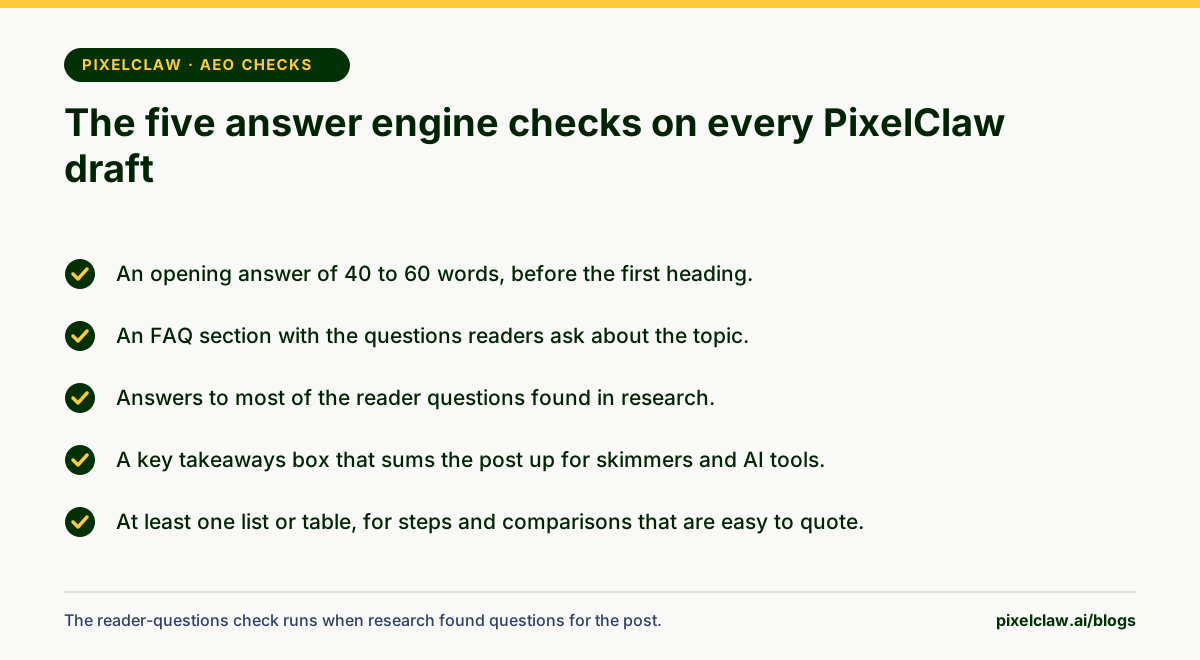
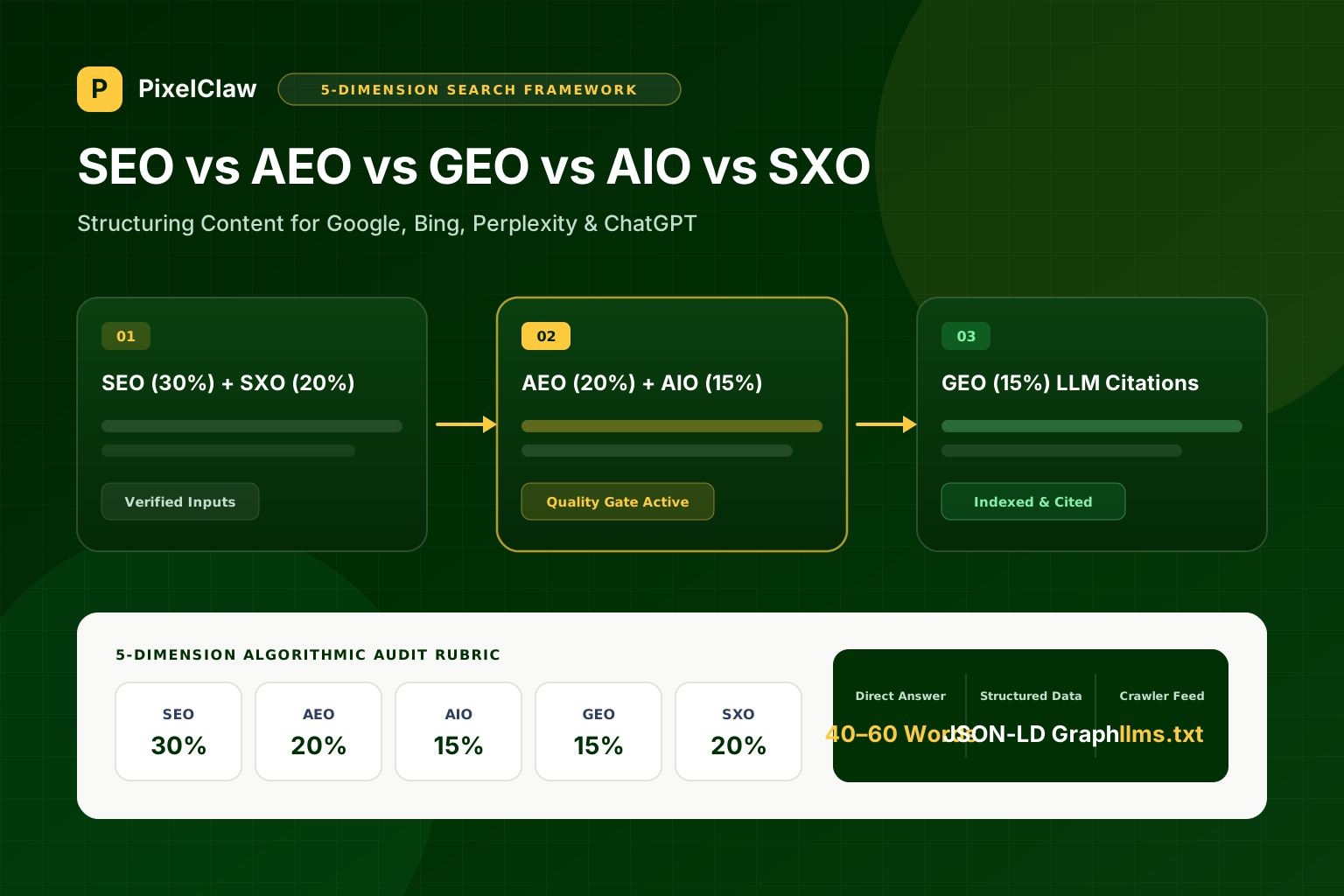
Answer engines carry 20% of a PixelClaw score. Five checks make up that area, and each one maps to a habit in this guide. When a check fails, a one-click fix writes the missing piece and shows it to you before anything changes.
Mistakes that stop AEO blogs being quoted
The most common mistake is the slow start: three sentences about why the topic matters before any answer appears. Answer engines skip it, and so do readers.
The second is the dependent answer, a sentence that only makes sense after the previous section, such as "As mentioned above, that is why the second option wins." Quoted on its own, it means nothing.
The third is hedging every claim until nothing is left. "It depends" is sometimes true, but follow it immediately with what it depends on and the most common answer. The fourth is answering a different question from the one in the heading, which happens more often than you would think when a draft is written from loose notes.
Fix these four and most posts become quotable without any other change. For how AEO fits with SEO and GEO, read AEO vs GEO vs SEO, then the guide to GEO blogs.
How to tell whether your AEO blogs are being quoted
There is no single report for answer engine visibility yet, so measure it from three directions.
Search Console is the first. Queries where your post sits in position one or two but gets few clicks are often queries where your answer is shown in a snippet. That is a win for visibility, and a hint to make the rest of the post worth clicking into.
Manual checks are the second, and they are underrated. Once a month, ask Google, ChatGPT and Perplexity the five questions your best posts answer, and note whether your site is quoted or linked. It takes fifteen minutes and tells you more than most dashboards.
Referral traffic is the third. Visits from chatgpt.com, perplexity.ai and similar domains show up in most analytics tools. They are small numbers today for most blogs, but they are growing, and they come from people who were sent to you by an answer.
When a post is not being quoted, compare its opening with the passage that is. Nine times out of ten the winner answers sooner, more specifically, or with a source the engine trusts. Rewrite your opening with that in mind, and check again next month.
- Answer the title's question in the first paragraph, in 40 to 60 words, before any heading.
- Write H2 headings as the questions people actually type, and answer each in its first sentence.
- Every answer must make sense on its own, because answer engines quote passages, not pages.
- FAQ blocks, key takeaways, lists and tables give answer engines clean pieces to lift.
- Expect fewer clicks on simple facts and more trust on complex ones; write for both.
Frequently Asked Questions
What is the difference between AEO and SEO?+
SEO helps a page rank in the list of results. AEO helps a passage from the page become the answer itself, in a featured snippet, a voice reply or an AI chat. The same post can do both, and the habits overlap more than they differ.
Do I need FAQ schema for AEO?+
It helps machines read your questions and answers, but since 2023 Google shows FAQ rich results mainly for well-known government and health sites. Keep the FAQ for readers and answer engines, and don't expect the old dropdowns in Google results.
How long should a featured snippet answer be?+
Most paragraph snippets quote around 40 to 60 words. Shorter answers often lack the context to stand alone, and longer ones get cut off mid-sentence, which makes your answer look worse than a rival's tidy one.
Won't AEO reduce my clicks if the answer is shown in the results?+
For one-line facts, sometimes. For questions where the reader needs more than one sentence, being quoted builds recognition and sends the readers who want depth. Write the short answer generously and make the rest of the post worth the click.
Does AEO work for ChatGPT and Perplexity?+
Yes. Chat assistants that browse the web prefer passages that answer directly and cite sources, the same thing featured snippets prefer. Our guide to GEO blogs covers what else makes a post likely to be cited by AI.
Sources
- Featured snippets and your website — Google Search Central
- Changes to HowTo and FAQ rich results — Google Search Central Blog (FAQ rich results now show mainly for well-known government and health sites.)
- FAQPage type — Schema.org
Built & scored using PixelClaw.ai
More from this blog
Continue exploring autoblogging architecture, AI blog writing, and SEO / AEO / GEO playbooks.
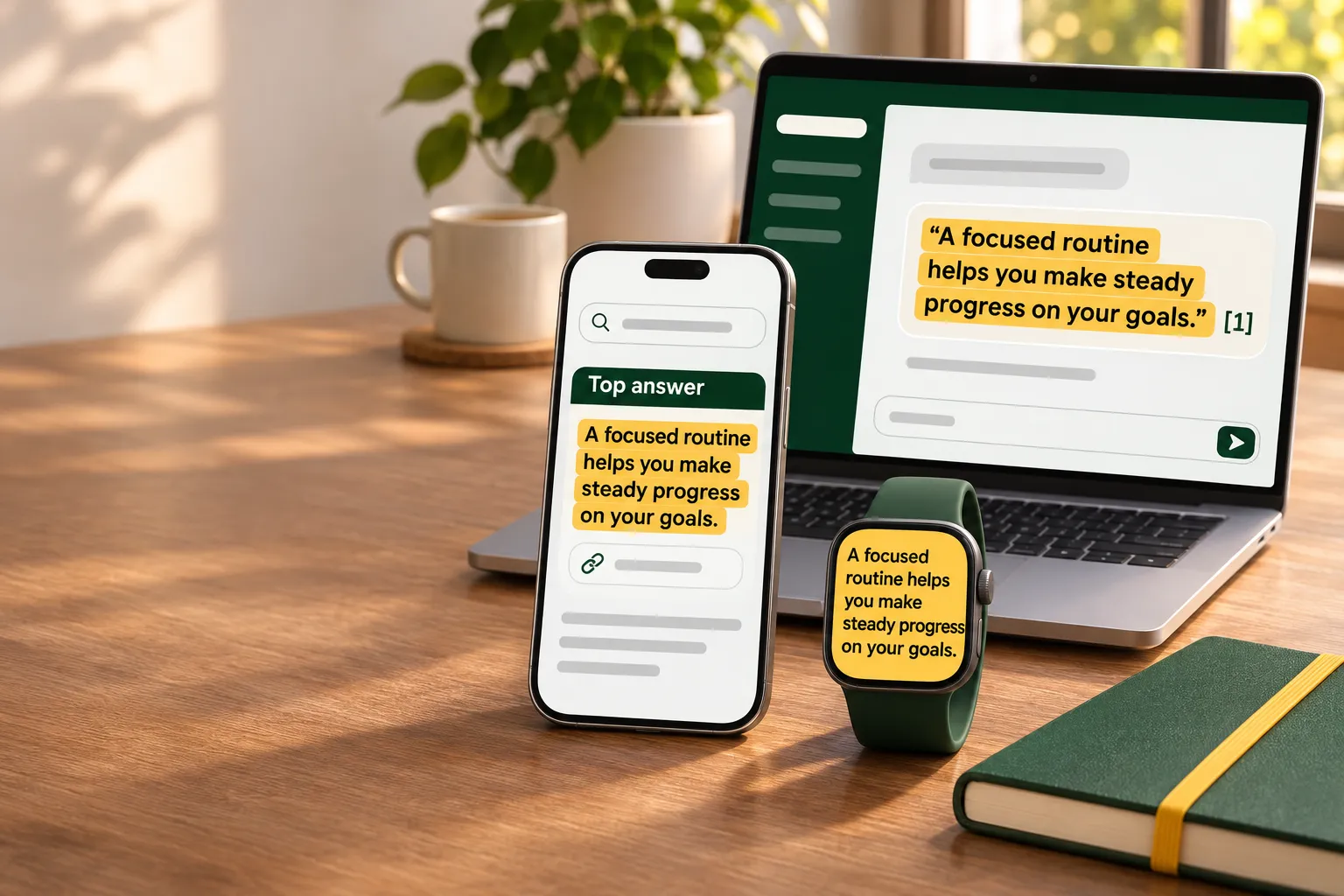
AEO for Startups: How to Become the Answer Google, ChatGPT and Siri Give
Answer engine optimization explained for founders: what AEO means, why a startup can win it before it can win page one, and how to write the answer that gets picked.
PixelClaw Editorial Team
Product and search team
AEO vs GEO vs SEO: How to Structure Blog Posts So Perplexity, ChatGPT, and Google AI Overviews Cite You
Search visibility now spans traditional blue links, direct answer snippets, and generative AI citations. Here is how SEO, AEO, AIO, GEO, and SXO work together on every post.
Marcus Vance
Head of Growth Architecture
GEO Blogs: How to Get Your Posts Cited by ChatGPT, Perplexity and Gemini
Generative engine optimization for blogs: let the AI crawlers in, give them a map, and write passages specific enough that an AI answer quotes them with your name attached.
PixelClaw Editorial Team
Product and search team