Listicles
PixelClaw toolsAI Listicle Generator: Roundups and Top-10 Posts That Earn Their Rankings
How to generate listicles and roundups with AI that readers trust: clear criteria, honest picks, comparison tables and dated facts, and how PixelClaw plans each roundup.
On this page▸
An AI listicle generator writes list-style posts such as roundups, top-ten lists and best-of comparisons. The ones that rank have clear selection criteria, real facts for every entry, a comparison table and an honest note on who should pick what. PixelClaw plans these as roundup articles of five to ten sections and scores each before it publishes.
Why listicles rank, and why most AI listicles don't
Lists answer a specific kind of search: someone who wants options. "Best project management tools for small agencies" is not a question with one answer, and a well-made list saves the reader hours of tabs.
Most AI-generated listicles fail for the same reason. They are lists of names with generic praise: "powerful features", "easy to use", "great value". Nothing in them could not be said about every other entry. Google's guidance on writing high-quality reviews asks for the opposite: evidence, measurements, what makes each option different, and the pros and cons of each.
What a listicle needs before it can rank
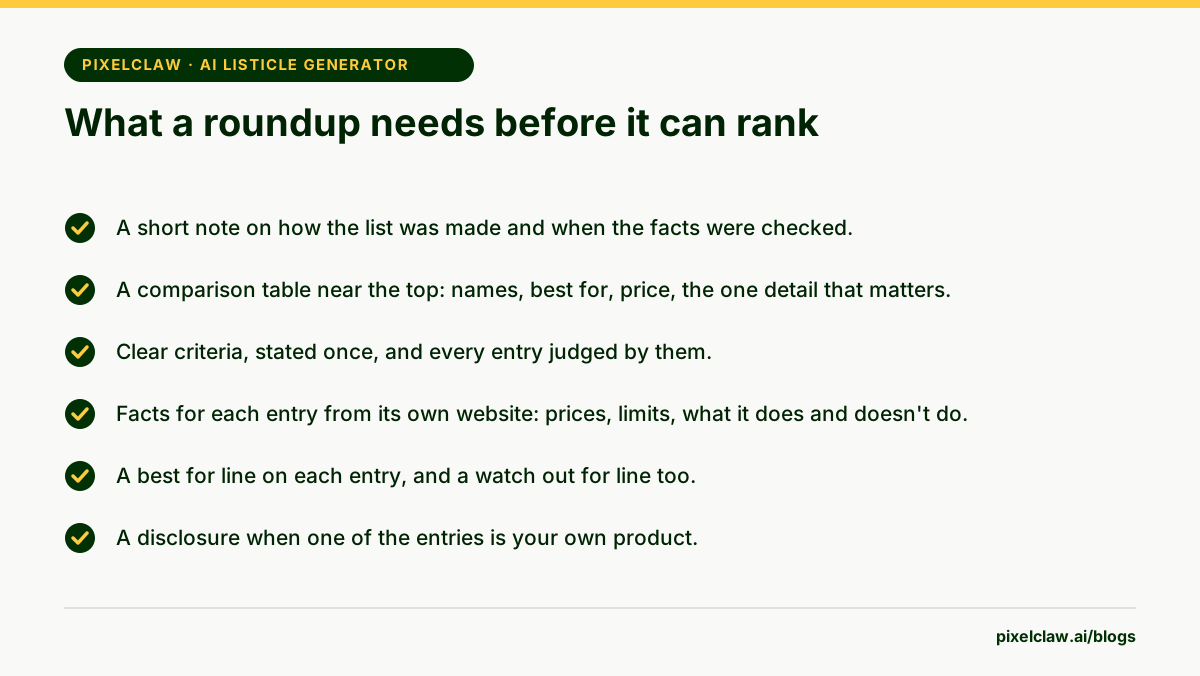
A listicle that earns its ranking has a few things the thin ones lack, and an AI listicle generator should produce all of them, not just the list.
How PixelClaw plans and writes a roundup
When research shows that a search wants options, PixelClaw plans a roundup: five to ten sections, usually one per entry plus an introduction to the criteria. The research reads the pages that rank, so the draft knows which options searchers expect to see, and which questions they ask about them.
The writing rules ask for comparisons in a table with a header row, numbers and dates instead of adjectives, and the source of each fact named in its sentence. The opening answer gives the short version of the list in 40 to 60 words, which is what answer engines quote when someone asks for the best option.
Like every post, the draft is scored before it can publish, and a polish pass fixes what failed: a missing FAQ, an over-long title, missing key takeaways.
Facts and honesty are the whole game
The thing that separates a trusted roundup from a forgettable one is not the writing. It is whether the facts are right and the judgments are fair.
Read prices and features from each vendor's own page, note the date, and link the page. If your own product is on the list, say so near the top and judge it by the same criteria, including where it falls short. Our own comparisons follow that rule: PixelClaw is on them, disclosed, with notes on when another tool fits better.
No AI listicle generator can guarantee its facts are current, because vendors change prices without telling anyone. Treat each generated roundup as a draft until every fact in its table has been checked against the source.
Keeping listicles fresh
A roundup decays faster than almost any other post. Prices change, products launch and shut down, and a list that was right in March can be wrong by November. Searchers notice the date, and so do answer engines comparing sources.
Put a review date in your calendar for every listicle that brings real traffic. Re-check the table, update what changed, note the new check date on the page, and add or remove entries where the market moved. For a live example of the format, see our roundup of the best AI blog writers.
A structure that works for most listicles
Open with the short answer: the top pick and who it suits, in 40 to 60 words. Follow with a sentence on how the list was made and when the facts were checked. Then the comparison table, so skimmers get everything in one glance.
Each entry then gets its own section in the same order: what it is, who it is best for, what it costs according to its own pricing page, what stands out, and what to watch out for. Keep the sections parallel, so readers can compare like with like. Close with a short note on how to choose between the top picks, and an FAQ for the questions readers still have.
That structure is not a template to fill with adjectives. Each line needs a fact or a judgment behind it, or it should be cut. A listicle with five strong entries and honest notes beats one with fifteen entries and a paragraph of praise for each.
Listicles and AI answers
"What is the best X" is one of the most common questions people ask AI assistants, and assistants answer it by drawing on lists they trust. A roundup with a clear top pick, a stated method, sourced facts and a comparison table gives them exactly what they need to quote.
That is also why disclosure matters more now. An AI assistant comparing several sources will notice when a list praises its own publisher above everything with no evidence. A list that discloses and judges fairly is the one that keeps being cited.
- Listicles rank when every entry earns its place with criteria and facts, not adjectives.
- State how the list was made and when the facts were checked, near the top.
- A comparison table near the top serves skimmers, featured snippets and AI answers.
- Say who each pick is best for, including when your own product is not the right choice.
- Re-check prices and features on a schedule; a stale roundup loses to a fresh one.
Frequently Asked Questions
Do listicles still work for SEO?+
Yes, for searches that ask for options, such as best, top or alternatives. They work when each entry is backed by real information and a clear reason, and they fail when they are thin lists of names with generic praise.
How many items should a listicle have?+
As many as genuinely deserve a place. Five well-argued picks beat fifteen thin ones. PixelClaw plans roundups at five to ten sections, which fits most best-of searches.
Can I include my own product in a listicle?+
Yes, if you say so plainly and judge it by the same criteria as the rest. Readers and search engines both respect a disclosure and an honest note on when a competitor is the better choice.
How often should a roundup be updated?+
Whenever prices or features change, and at least every few months for fast-moving categories like software. Show the date the facts were checked so readers know how current the list is.
Sources
- Write high quality reviews — Google Search Central
- Creating helpful, reliable, people-first content — Google Search Central
Built & scored using PixelClaw.ai
More from this blog
Continue exploring autoblogging architecture, AI blog writing, and SEO / AEO / GEO playbooks.
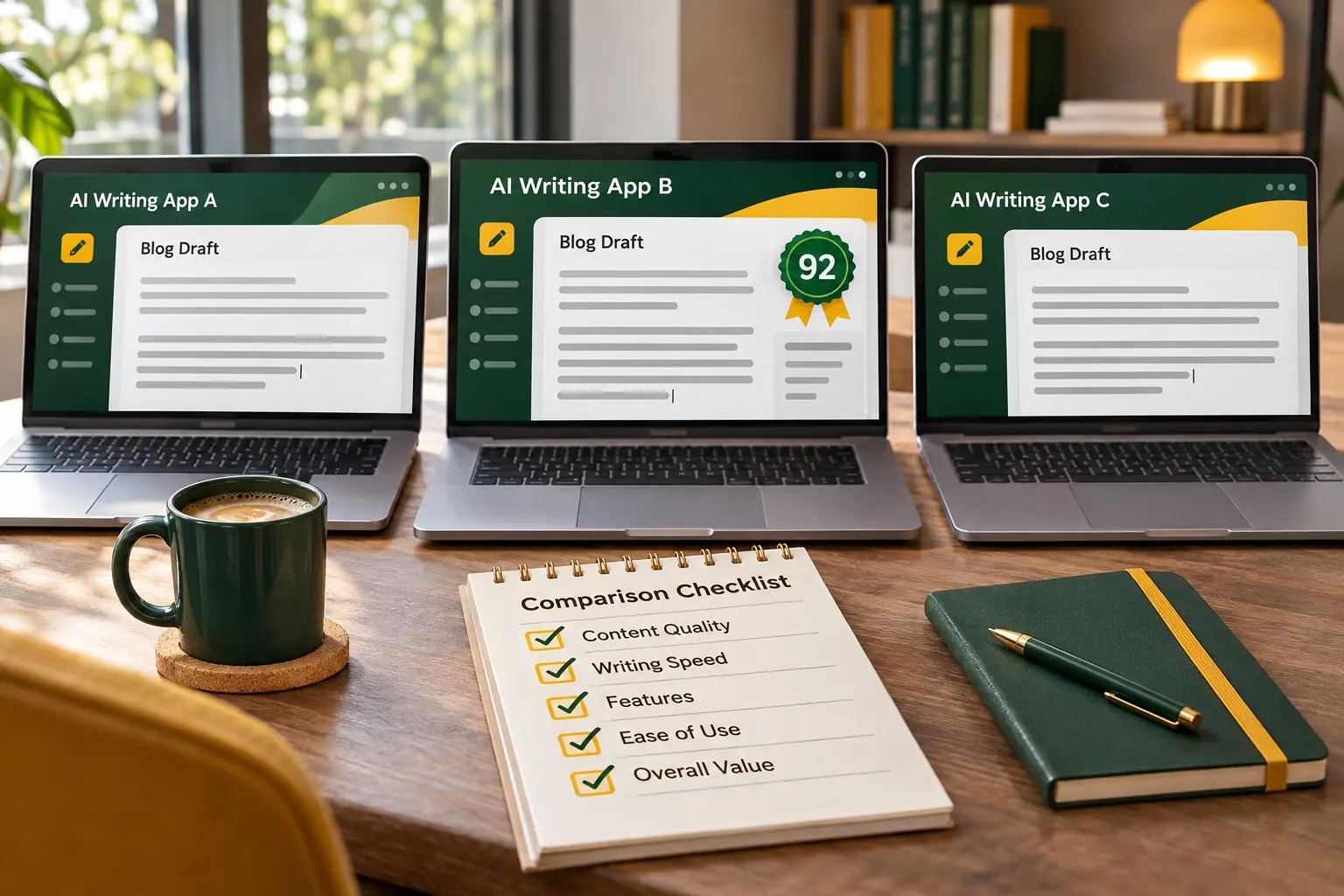
The Best AI Blog Writers in 2026, Judged on the Posts They Actually Publish
Eight AI blog writers compared on what reaches your blog: research before writing, checks before publishing, where posts go and what each one really costs, with prices from each vendor's own site.
PixelClaw Editorial Team
Product and search team
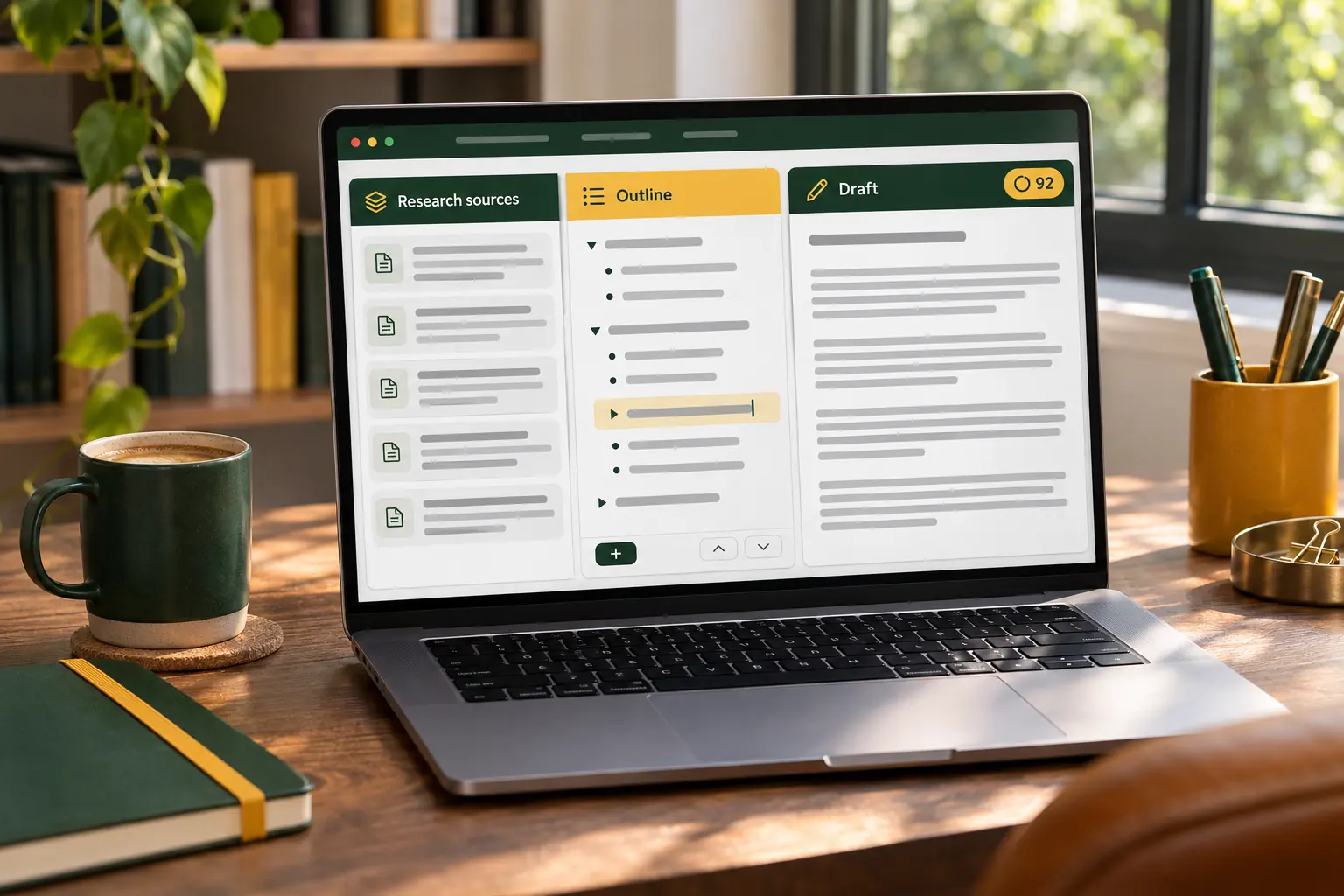
An AI Article Writer That Researches First: Outline, Draft and Score in One Place
How PixelClaw's AI article writer works: research before writing, an outline you control, a draft shaped to the kind of article the search needs, and a score before anything goes live.
PixelClaw Editorial Team
Product and search team

Best AI SEO Content Generators: One-Click Articles Worth Publishing
One-click AI SEO content generators compared on the controls that decide whether the output is publishable: research, internal links, images, checks before posting and price per article.
PixelClaw Editorial Team
Product and search team