GEO for startups
Growth guideGEO for Startups: What Generative Engine Optimization Means and How to Get ChatGPT to Recommend You
Buyers now ask an AI assistant which tool to use before they ever see a search result. Here is what GEO means, why it matters to startups, founders, bloggers and copywriters, and how to become the name the answer includes.

On this page▸
GEO for startups is generative engine optimization: making your startup the source ChatGPT, Perplexity and Gemini cite and recommend when they write an answer. It matters because buyers now ask AI which tool to use. Win it with clear, sourced posts, crawlers allowed, a consistent brand description and mentions on sites the engines trust.
What GEO means: generative engine optimization, defined
A generative engine is an AI system that answers by writing new text from several sources: ChatGPT with search, Perplexity, Gemini, Claude, Copilot and Google's AI features. Instead of handing the reader ten links, it reads pages, combines what they say and replies in its own words, usually with a few citations.
Generative engine optimization (GEO) is the work of making your content one of those sources and your brand one of the names in the reply. The term comes from a 2023 research paper, GEO: Generative Engine Optimization, which tested what changes a page's visibility in such answers. Adding citations, quotations from credible sources and statistics raised visibility by up to 40%, while stuffing keywords did little.
One way to picture the difference: a search engine hands the reader a list of options, while a generative engine hands them a decision, and GEO is about being inside that decision. In short: SEO gets you ranked, AEO gets you quoted, and GEO gets you recommended. For a startup, the last one is often where the buying decision now starts.
Why GEO matters to startups, founders, bloggers, copywriters and organic growth
When a buyer asks an assistant "what is the best tool to grow organic traffic", the answer is a shortlist. Being on it is the new version of being recommended by a friend, and being absent means you were never considered. That is why GEO matters to every group that reads this blog, for slightly different reasons.
| Who | Why GEO matters | First move |
|---|---|---|
| Startups | AI shortlists are the new word of mouth; a missing name loses deals you never hear about | Publish clear answers to the questions buyers ask an assistant |
| Founders | You cannot buy a mention inside an answer the way you buy an ad; you earn it with expertise | Turn what you know into sourced posts under your name |
| Bloggers | Cited posts send readers who already trust the source they were pointed to | Add statistics, quotations and sources to your best posts |
| Copywriters | Specific, sourced claims get repeated by AI; vague claims get paraphrased away | Write claims an engine can quote and credit |
| Organic growth teams | GEO compounds with SEO, because AI search draws on pages that are already indexed | Keep publishing on a schedule and track AI referrals |
How generative engines choose whom to cite
No AI company publishes its ranking rules, but the research and the engines' own documentation point to the same few factors. The engine has to be allowed to read the page: OpenAI says OAI-SearchBot is how sites appear in ChatGPT search results, and Perplexity documents PerplexityBot for the same purpose. A robots.txt that blocks them keeps you out of their answers.
The page has to answer the question directly, in passages that make sense on their own. It has to carry evidence: numbers, named sources and quotations, the same things the GEO paper found move visibility. And the brand has to be recognisable, described the same way on your site, in your structured data and on the other sites that mention you.
That last factor is why GEO is not only a writing job. An engine that sees your startup described consistently across your blog, your docs, partner pages and reviews has far more reason to name you than one that finds a single page.
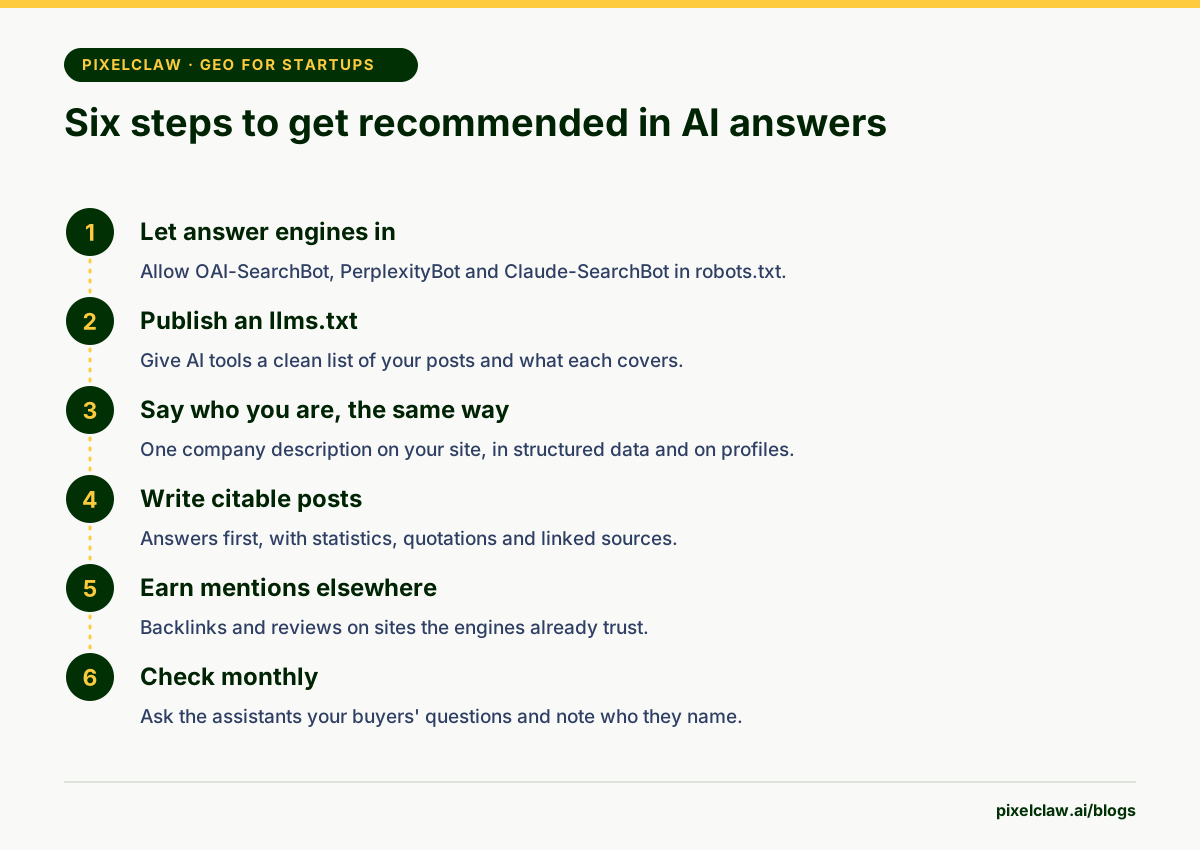
A GEO playbook for startups
Most of this takes an afternoon to set up and then a steady habit to keep. Do it in this order.
Backlinks and brand mentions: the off-site half of GEO
Generative engines lean on sources they already trust, so the places that mention you matter as much as your own posts. The good news for a startup is that the best mentions are earned with work you are doing anyway.
Publish one piece of original data a quarter, even a small survey of your users, because statistics are what other writers cite and link to. Say yes to podcasts and expert roundups in your niche. Ask integration partners to list you on their pages. Write a guest post where your buyers read, with a link back to the post that answers the question in full. Make sure your listings on review and comparison sites describe the product the way your own site does.
Avoid shortcuts. Paid link schemes break Google's spam policies, and spamming forums with links teaches both people and engines to ignore your name.
How PixelClaw handles the on-site half of GEO
A PixelClaw blog lets answer-engine crawlers in from the start: OAI-SearchBot, ChatGPT-User, Claude-SearchBot, Claude-User, PerplexityBot and Perplexity-User are allowed until you say otherwise. Training crawlers such as GPTBot, ClaudeBot and Google-Extended have their own switch, so you can stay visible in AI answers while opting out of model training.
Each blog publishes an llms.txt that lists your posts with their summaries, and structured data that names your company as the publisher. Every draft is researched first and keeps its sources with it, and the writing rules favour the specific, quotable claims generative engines repeat.
In the score, GEO carries 15% and checks the two things that most often keep a blog out of AI answers: whether AI crawlers are allowed, and whether search engines can see who publishes the site. Paid plans can also translate a post into eleven languages, each with the keyword people search there, which puts your answers in front of assistants in more markets.
One honest limit: PixelClaw does not monitor what ChatGPT or Perplexity say about you. Run the monthly check by hand; it takes a few minutes and tells you what to write next. For the writing side in depth, read our guide to GEO blogs.
GEO mistakes that keep startups out of AI answers
The most common one is invisible: a robots.txt rule, firewall or bot-protection setting that blocks AI search crawlers without anyone deciding to. Check that OAI-SearchBot, PerplexityBot and Claude-SearchBot can fetch your posts, especially after moving the blog to a new host or switching on a security service.
The second is describing the company five different ways. If your homepage says "workflow platform", your docs say "automation tool" and your listings say "CRM add-on", an AI system has to guess what you are, and guesses tend to favour competitors with a clearer story.
The third is publishing claims without evidence. Generative engines prefer passages they can attribute, so a post full of adjectives and no numbers gives them nothing to cite. The fourth is impatience: a post has to be crawled and indexed before any AI search tool can find it, and the first weeks after publishing often show nothing at all.
Finally, judge GEO by what you can check yourself. Asking the assistants your buyers' questions is slower than a dashboard, and far more honest about where you stand.
How to measure GEO without a dashboard
Pick ten questions your buyers would ask an assistant before choosing a tool like yours. Once a month, ask ChatGPT, Perplexity and Gemini each of them, and record whether your brand is named, whether your site is cited, and who is named instead. The competitors who show up are your content plan.
In your analytics, watch referral visits from chatgpt.com, perplexity.ai and gemini.google.com. They are usually small and they convert well, because the reader arrives already pointed at you. GEO works best as part of a wider organic growth strategy, next to AEO for startups and the trust signals in AIO for startups.
- GEO, generative engine optimization, is about being cited and named inside AI-written answers, not only ranked in a list of links.
- Research on generative engines found that adding citations, quotations and statistics raised a page's visibility in their answers by up to 40%.
- Let answer-engine crawlers such as OAI-SearchBot and PerplexityBot read your blog, and describe your company the same way everywhere.
- Half of GEO happens off your site: backlinks and mentions on sources the engines already trust.
- PixelClaw handles the on-site half by default: AI crawlers allowed, llms.txt, publisher details and sourced posts on a steady schedule.
Frequently Asked Questions
What is the difference between GEO and SEO?+
SEO earns your page a place in a list of search results. GEO earns your brand a mention or a citation inside an answer an AI writes from several sources. GEO builds on SEO, because most AI search tools retrieve pages from a web index before they write.
What is the difference between GEO and AEO?+
AEO is about one passage being quoted as the answer, as in a featured snippet or a voice reply. GEO is about being one of the sources an AI combines and credits, and about your brand being named in its recommendation. The habits overlap; GEO adds brand mentions and crawler access.
Should a startup block GPTBot?+
That is a choice about training, not search. OpenAI documents GPTBot for training and OAI-SearchBot for showing sites in ChatGPT search, and each follows its own robots.txt rules. PixelClaw lets you allow answer engines while blocking training crawlers, or the reverse.
Does llms.txt help with GEO?+
It is a proposed standard that gives AI tools a clean map of your site. Not every engine reads it yet, and it costs nothing to have. Every PixelClaw blog publishes one automatically and keeps it updated as you publish.
How long does GEO take to work?+
A post has to be crawled and indexed before an AI search tool can retrieve it, so expect weeks for the first citations on specific questions and longer for broad recommendations. Consistent publishing and mentions elsewhere shorten the wait.
Sources
- GEO: Generative Engine Optimization — Aggarwal et al., arXiv (Adding citations, quotations and statistics raised visibility in generative engine answers by up to 40%.)
- Overview of OpenAI crawlers — OpenAI
- Perplexity crawlers — Perplexity
- The /llms.txt file — llmstxt.org
Built & scored using PixelClaw.ai
More from this blog
Continue exploring autoblogging architecture, AI blog writing, and SEO / AEO / GEO playbooks.

Organic Growth Strategy for Startups: Build Traffic That Keeps Growing While You Sleep
Ads rent attention and stop the day the budget does. An organic growth strategy builds a library of posts that rank in Google, get quoted by AI answers and keep sending buyers for years.
PixelClaw Editorial Team
Product and search team

AEO for Startups: How to Become the Answer Google, ChatGPT and Siri Give
Answer engine optimization explained for founders: what AEO means, why a startup can win it before it can win page one, and how to write the answer that gets picked.
PixelClaw Editorial Team
Product and search team
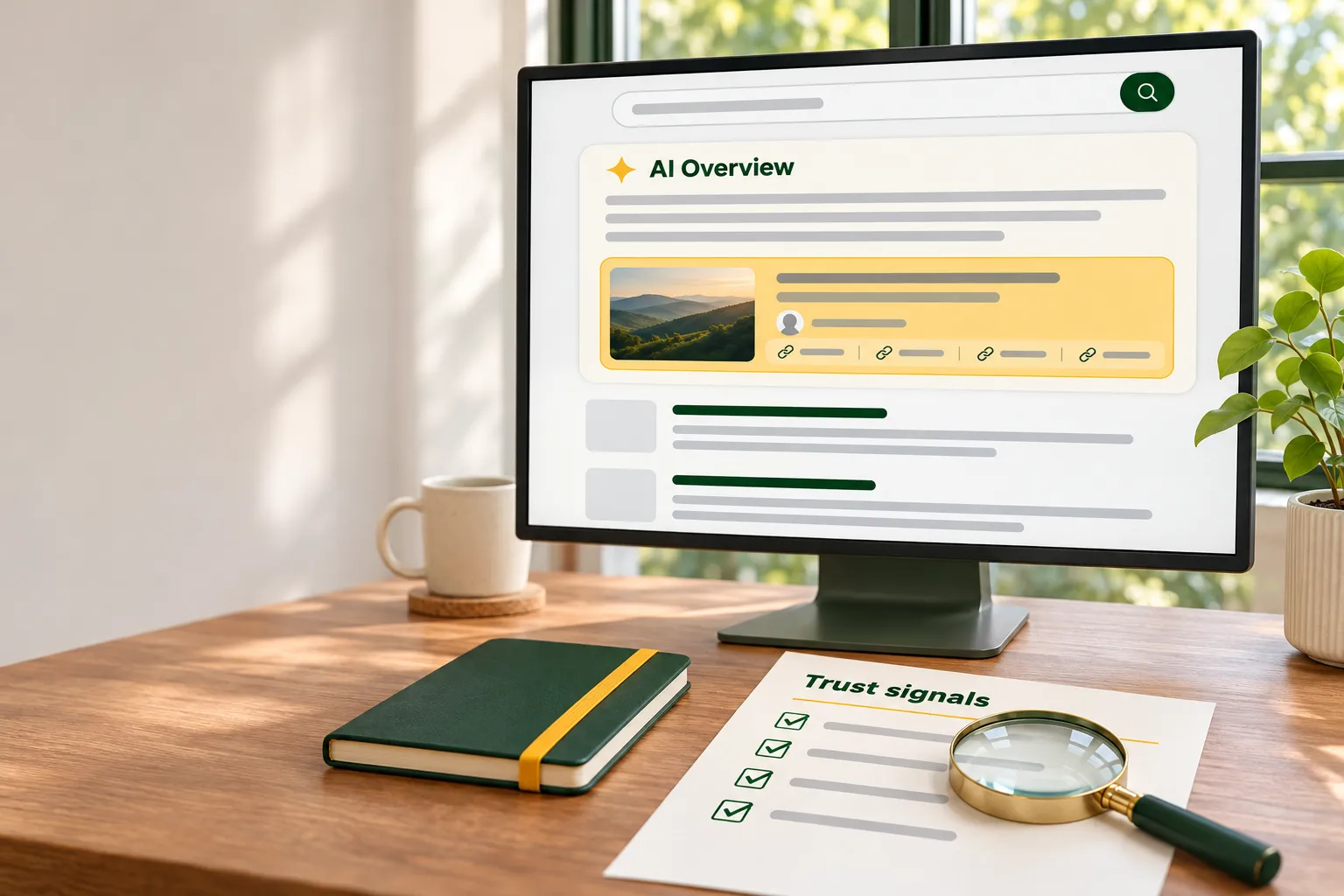
AIO for Startups: What AI Optimization Means and How a New Brand Earns a Place in AI Overviews
AI systems summarize the sources they trust. Here is what AIO means, why it matters to startups, founders, bloggers and copywriters, and the trust signals a brand-new company can show from its first post.
PixelClaw Editorial Team
Product and search team