AI blogging
AI search guideAI Blogging Without the Slop: A Working Process for Posts People Trust
Where AI earns its place in a blog, where a person still has to step in, and a five-step process that turns AI drafts into posts worth putting your name on.
On this page▸
AI blogging means using AI to research, outline and draft blog posts while a person decides what gets published. It works when the AI starts from real sources, the writer controls the outline, and every draft is checked before it goes live. Skip those steps and you get fluent filler nobody trusts.
What AI blogging is good at, and what it is not
AI is very good at the parts of blogging that are slow and mechanical: reading twenty sources and pulling out what they agree on, turning a messy brief into a clean structure, writing a first draft that covers the obvious questions, and doing all of that at two in the morning without complaint.
It is bad at the parts readers actually come back for. It has never installed the product, argued with a customer or watched a campaign fail. It will state a price with total confidence and be wrong. It agrees with whatever framing you hand it. A blog made only of what AI is good at reads like a summary of everyone else's blog.
So the useful question is not whether to use AI for blogging but which jobs to give it. The table below is how we split the work on PixelClaw's own posts.
| Job | Give it to AI | Keep it human |
|---|---|---|
| Reading what already ranks | Yes, it reads faster and misses less | Skim the sources it picked |
| Choosing the topic | Suggestions only | You know what customers ask |
| Outline | First version | Approve, reorder, cut |
| First draft | Yes | Read all of it |
| Numbers, prices, names | Draft them from sources | Check every one |
| Opinion and experience | No | Add one real example per post |
A five-step AI blogging process that holds up
Most bad AI blog posts come from skipping straight from a keyword to a draft. The process below adds two short checkpoints, and they are what separates a post you can publish from one you have to rewrite.
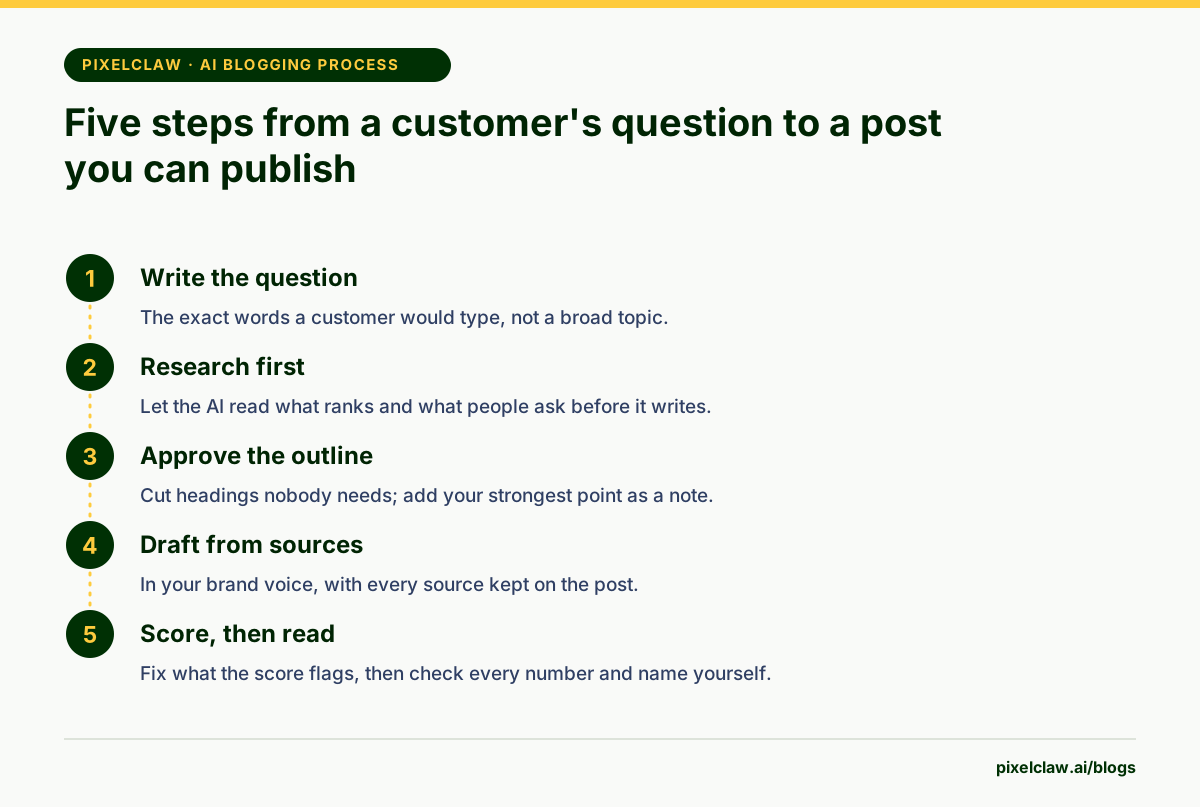
Step one is the question. Write down the exact question a customer would type, not a topic. "Roof repair" is a topic; "how much does it cost to fix a leaking flat roof" is a question an AI can answer well.
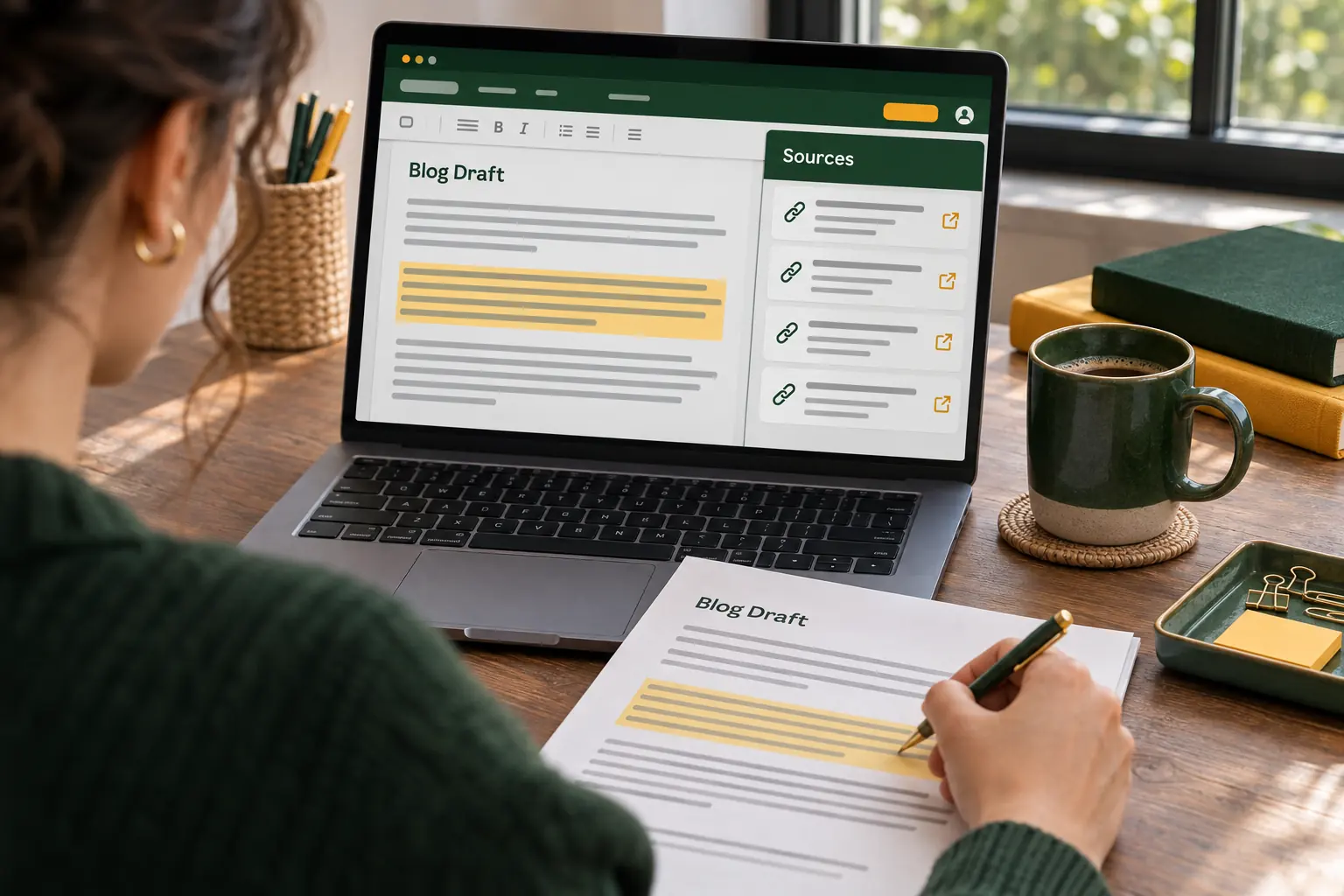
Step two is research. The AI should read the pages that rank for that question and the questions people ask around it before it writes anything. In PixelClaw this happens automatically and the sources stay attached to the post, so you can open each one later.
Step three is the outline, and it is your first checkpoint. Read the headings in order. If a heading answers a question nobody asked, cut it. If your best argument is missing, add it as a note for the writer.
Step four is the draft, written from the sources in your brand voice. Step five is the second checkpoint: a score for structure and discoverability, then your own read for truth.
How to give the AI your voice and your facts
An AI writes like the internet's average unless you tell it otherwise. The fix is not a longer prompt for every post; it is a few things set up once and reused.
Start with a brand voice: how formal you are, whether you say "we", words you never use, a paragraph you are proud of as an example. PixelClaw keeps voices per blog and lets each post or Autopilot pick one.
Then give it your facts. Point PixelClaw at your website and it reads the pages into a business profile: what you sell, where, for whom, at what prices. Add a few knowledge files for things your site does not say. Posts then mention your real services instead of generic ones, which is the difference between a post that sells and one that only ranks.
Editing an AI draft: what to read for
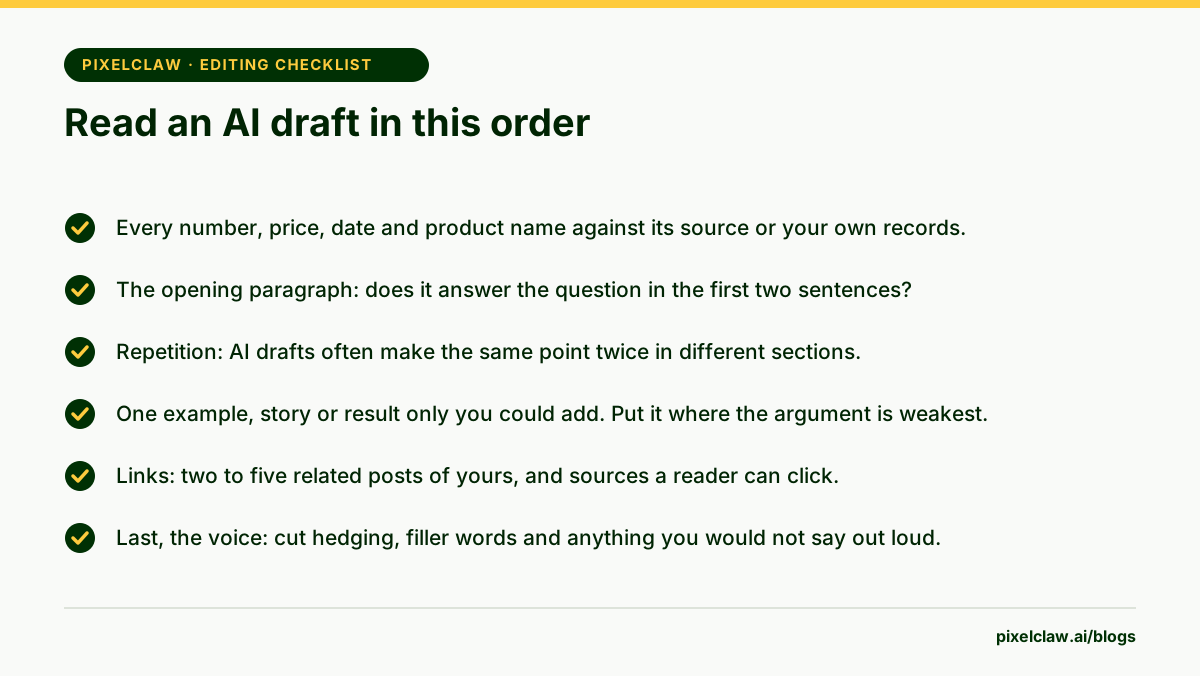
Editing AI writing is a different job from editing a person. The grammar is fine. The problems hide in confident sentences that sound right, in sections that repeat each other, and in an opening that circles before it answers.
Read in this order and you will catch most of it in ten minutes. Leave style polishing for last, because half the sentences you would polish may not survive the fact check.
What a week of AI blogging looks like in practice
It helps to see the process as a calendar rather than a theory. Here is a realistic week for a small business publishing three AI blog posts, with one person spending about three hours in total.
Monday takes twenty minutes. You look at last week's Search Console numbers, pick three questions customers asked recently, and add them to the queue. If one of them overlaps an older post, you note that the older post needs updating instead.
Tuesday morning the drafts are ready. You read each outline first, the part that matters most, then the draft. Most of the time goes on the facts: a price that changed in September, a product name the AI spelled the old way, a claim that the sources support only partly. You add one real example to each post, something from a customer conversation or your own numbers.
Wednesday to Friday the posts go out on their scheduled days. On Friday you spend twenty minutes on the oldest post that is losing readers: new date, two fresh facts, a better title. That refresh habit is where a lot of AI blogging's long-term value comes from, because it keeps the archive alive instead of letting it rot.
Three hours a week for three posts and one refresh is a pace a small team can keep for a year. That consistency, more than any single post, is what builds a blog that ranks.
AI blogging and Google: what the rules actually say
Google's position fits in two sentences. Its guidance on AI-generated content says it rewards helpful, reliable content however it is produced, and that using automation mainly to manipulate rankings breaks its spam policies.
Its page on people-first content adds three questions worth answering on every blog: who created the content, how it was created, and why. A named author or team, a short note on how AI is used, and a reason that is about readers rather than traffic cover all three.
None of this needs special tricks. It needs posts that would be useful if search engines did not exist, which is a good test for any AI blog post before you publish it.
AI blogging tools: assistant, writer or autopilot?
AI blogging tools come in three shapes, and picking the wrong shape causes more frustration than picking the wrong brand.
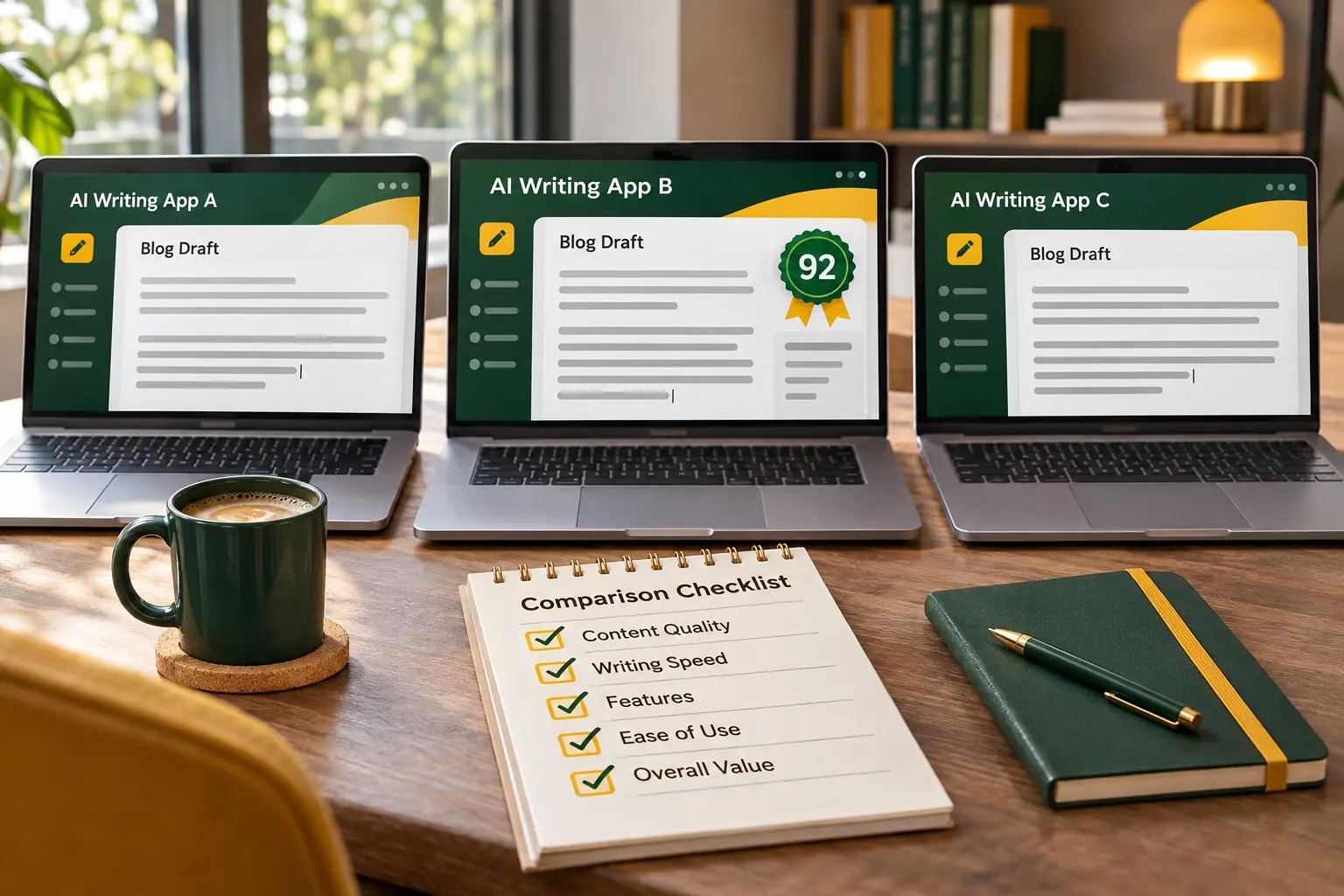
A chat assistant such as ChatGPT or Claude is the most flexible and the least finished: you do the research, structure, images, formatting and publishing yourself. A blog writer researches and drafts inside one workspace, and the better ones score the draft too. An autopilot runs the writer on a schedule from a queue of topics and publishes what passes.
PixelClaw is a writer and an autopilot in one, with the hosting included. If you want to compare it with the alternatives, start with the best AI blog writers or read how PixelClaw's AI blog writer works step by step.
- Choose an assistant if you publish a few posts a month and enjoy the writing.
- Choose a blog writer if you want research, structure and a score without giving up the final say.
- Choose an autopilot if you have a list of topics and want posts arriving on schedule, with approval or automatic publishing.
How to tell whether your AI blog is working
Count readers, not posts. A blog that adds forty posts a month and sees flat impressions in Search Console is not working; a blog that adds eight and watches impressions climb is.
Look at three things monthly. Impressions and clicks per post in Search Console show whether Google is testing your pages. Average position on your target queries shows whether the tests are going well. And a simple manual check, asking ChatGPT and Perplexity the questions your posts answer, shows whether AI answers mention you.
PixelClaw syncs Search Console data into each post and flags posts that are losing readers, so refreshing the right posts is a weekly habit rather than a quarterly project.
Common AI blogging mistakes, and the fix for each
The first mistake is publishing the first draft. Even a good AI draft has one or two sentences per section that sound right and say nothing. Cutting them takes minutes and makes the post noticeably sharper.
The second is asking for posts with no point of view. An AI will happily write "10 tips for better sleep" that match every other list online. Ask instead for the post only your business could write: what you recommend, what you refuse to do, what surprised your customers. Put that in the outline notes and the draft follows.
The third is letting volume replace planning. Fifty AI blog posts on loosely related topics compete with each other and confuse search engines. Ten posts that cover one subject from every angle, linked together, do far more. Plan a cluster, finish it, then start the next.
The last is forgetting the reader once the post is live. Comments, sales calls and support tickets tell you which posts helped and which questions are still open. Feed those back into the queue and AI blogging gets better every month instead of staying flat.
- Hand AI the research summary, the structure and the first draft; keep opinions, experience and final facts human.
- The outline is the cheapest place to steer an AI post, so approve it before any drafting starts.
- Give the AI your voice and your facts up front: a brand voice, your website and a few reference files.
- Read every AI draft for numbers, names and claims; a quality score checks structure, not truth.
- Judge your AI blog by Search Console data and reader behaviour, not by how many posts it ships.
Frequently Asked Questions
Should I tell readers a post was written with AI?+
Google's own guidance suggests explaining how content was made when readers would reasonably wonder. A short note in your editorial policy covering how you use AI and who reviews posts is a sensible default, and it costs you nothing.
Can AI blogging replace a content writer?+
It can replace much of the drafting time, not the judgement. Someone still has to choose topics that matter to your customers, add what only you know, and check the facts before publishing.
Which AI is best for blogging?+
General chat assistants write fluent text but leave research, structure, images and publishing to you. Blog-specific tools such as PixelClaw research first, score each draft and publish it, which matters more than which model sits underneath.
Does AI-written content rank on Google?+
It can. Google ranks helpful content however it was produced and acts against content made mainly to manipulate rankings. Posts that answer a real question with sources and specifics rank; generic filler does not, whoever wrote it.
How long should an AI blog post be?+
As long as the question needs. PixelClaw plans each post's length from the articles already ranking for its keyword, between 800 and 5,000 words, instead of padding every post to one number.
Sources
- Google Search's guidance about AI-generated content — Google Search Central Blog
- Creating helpful, reliable, people-first content — Google Search Central (Includes Google's Who, How and Why questions about authorship and automation.)
- Search Quality Rater Guidelines — Google
Built & scored using PixelClaw.ai
More from this blog
Continue exploring autoblogging architecture, AI blog writing, and SEO / AEO / GEO playbooks.

Autoblogging in 2026: How to Run a Blog That Publishes Itself and Still Ranks
What autoblogging looks like when it works: a topic queue, research before writing, a score that holds weak drafts back, and a pace Google reads as a publication rather than a content farm.
PixelClaw Editorial Team
Product and search team
The Best AI Blog Writers in 2026, Judged on the Posts They Actually Publish
Eight AI blog writers compared on what reaches your blog: research before writing, checks before publishing, where posts go and what each one really costs, with prices from each vendor's own site.
PixelClaw Editorial Team
Product and search team

An AI Blog Writer That Also Hosts, Scores and Publishes Your Posts
Most AI blog writers stop at the draft. PixelClaw writes the post, scores it, and publishes it to a blog it hosts for you, with everything a blog needs already set up.
PixelClaw Editorial Team
Product and search team