Fitness blogging
Niche guideFitness Blogging Software: Write Health and Fitness Posts That Stay Responsible
What fitness blogging software can research and draft, and why health and fitness content still needs a qualified reviewer, cited sources and no promises of results.
On this page▸
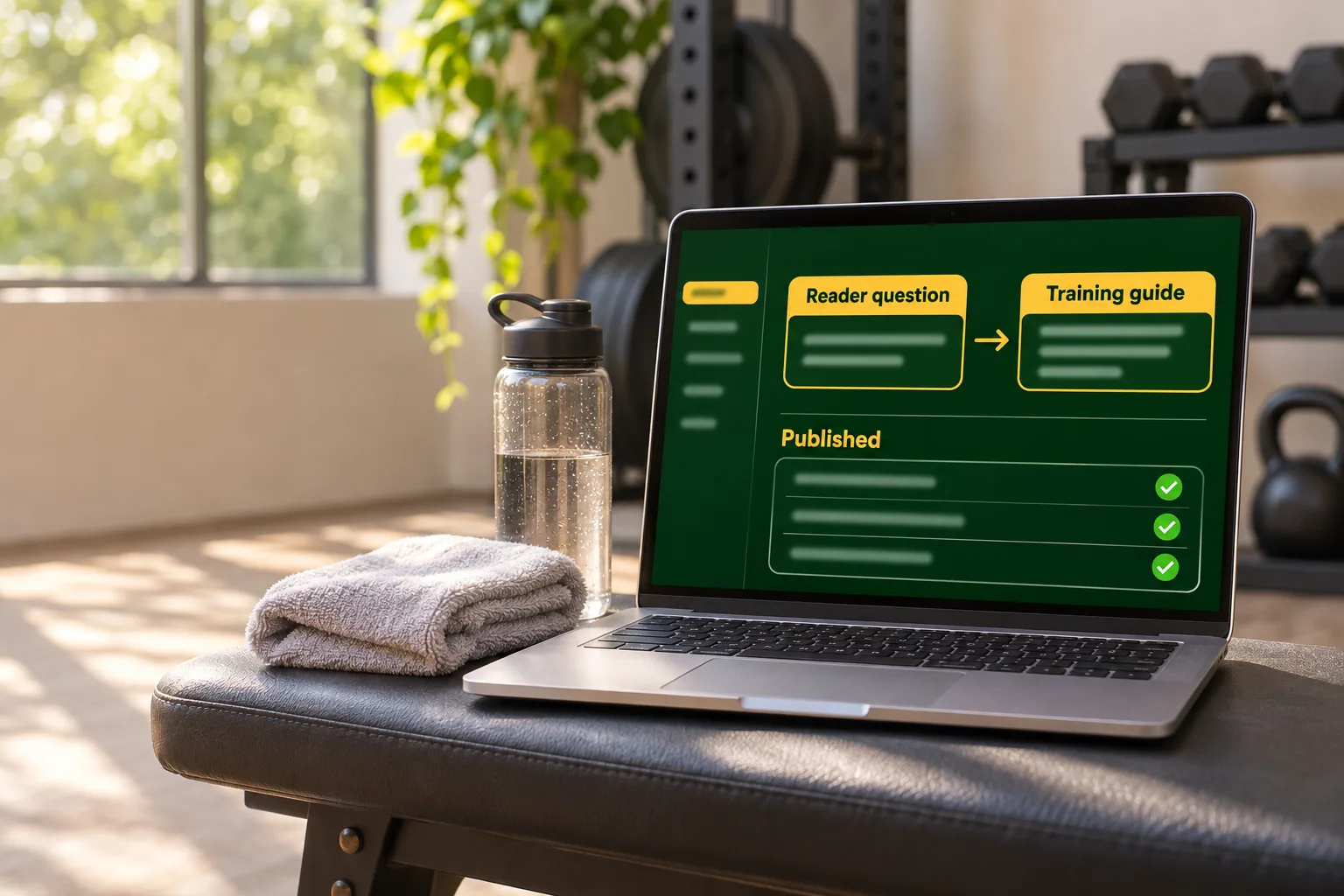
Fitness blogging software researches what readers ask about training, nutrition habits and recovery, writes an outline and a draft, scores it and publishes it on your blog. It saves writing time. Health and fitness content still needs a qualified reviewer and cited sources, and a post must not make medical claims or promise results.
What is fitness blogging software?
Fitness blogging software does the research, drafting and publishing for a health and fitness blog. It collects the questions readers ask, writes an outline and a draft, scores it and publishes it on your blog after you approve it.
It is not a trainer and it is not a doctor. It reads pages that already exist, so it can lay out common advice. It cannot assess a body, a condition or an injury, and it should never be the last reader of a post about health.
That makes it a fit for a coach who wants to share what they teach, a gym or studio that wants to answer member questions publicly and an individual who writes about their own training and wants to publish steadily.
What do fitness readers search for and ask AI assistants?
Fitness searches begin with a goal and a worry. Readers want a plan they can follow and reassurance that they are doing it right. They ask AI assistants the same things in full sentences, and an assistant tends to quote a page that answers in its first lines and names its source.
These are question types a fitness blog can own. The right column shows who must check each kind of answer.
| What the reader asks | What the post needs | Who must check it |
|---|---|---|
| How often should a beginner lift weights? | A simple weekly structure | A certified trainer |
| How do I start running after a long break? | A gradual run and walk plan | A trainer, with a note to see a doctor if unsure |
| How much exercise do adults need each week? | The official guideline, cited | You, against the source page |
| How do I fix my squat form? | Cues and common faults | A coach who has seen it in person |
| Is it normal to be sore for two days? | A plain explanation | A qualified reviewer |
| What is a good home workout with no equipment? | A sample session | You, after doing it yourself |
| How do I stay consistent when I am busy? | Habit ideas | Your own experience, honestly told |
| What should I eat before a morning workout? | General options, with sources | A dietitian |
Why most fitness blogs stall
Orbit Media's 2026 survey of 1,042 content marketers puts the average post at 3 hours and 20 minutes to write. A fitness post carries more care than that, because every claim about the body has to be right and sourced.
Coaches and trainers are busy with clients. The blog is last on the list, and the posts that do get written are rushed, so they lack sources. Then the writer worries about what they said and stops.
Software can take the early part of that work: the research, the outline and the draft. A reviewer and your own judgement make the post safe to publish.
What only a qualified person can supply
A qualified reviewer is the first requirement. Software cannot judge whether a plan suits a person with a heart condition, an injury or a pregnancy. A certified trainer, a dietitian or a doctor must read anything that touches health and say so on the page.
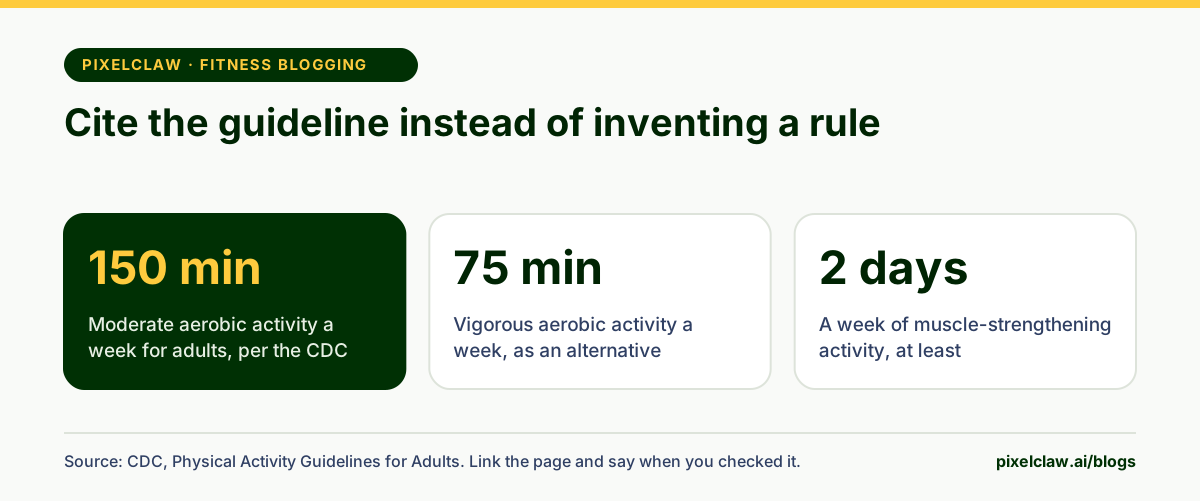
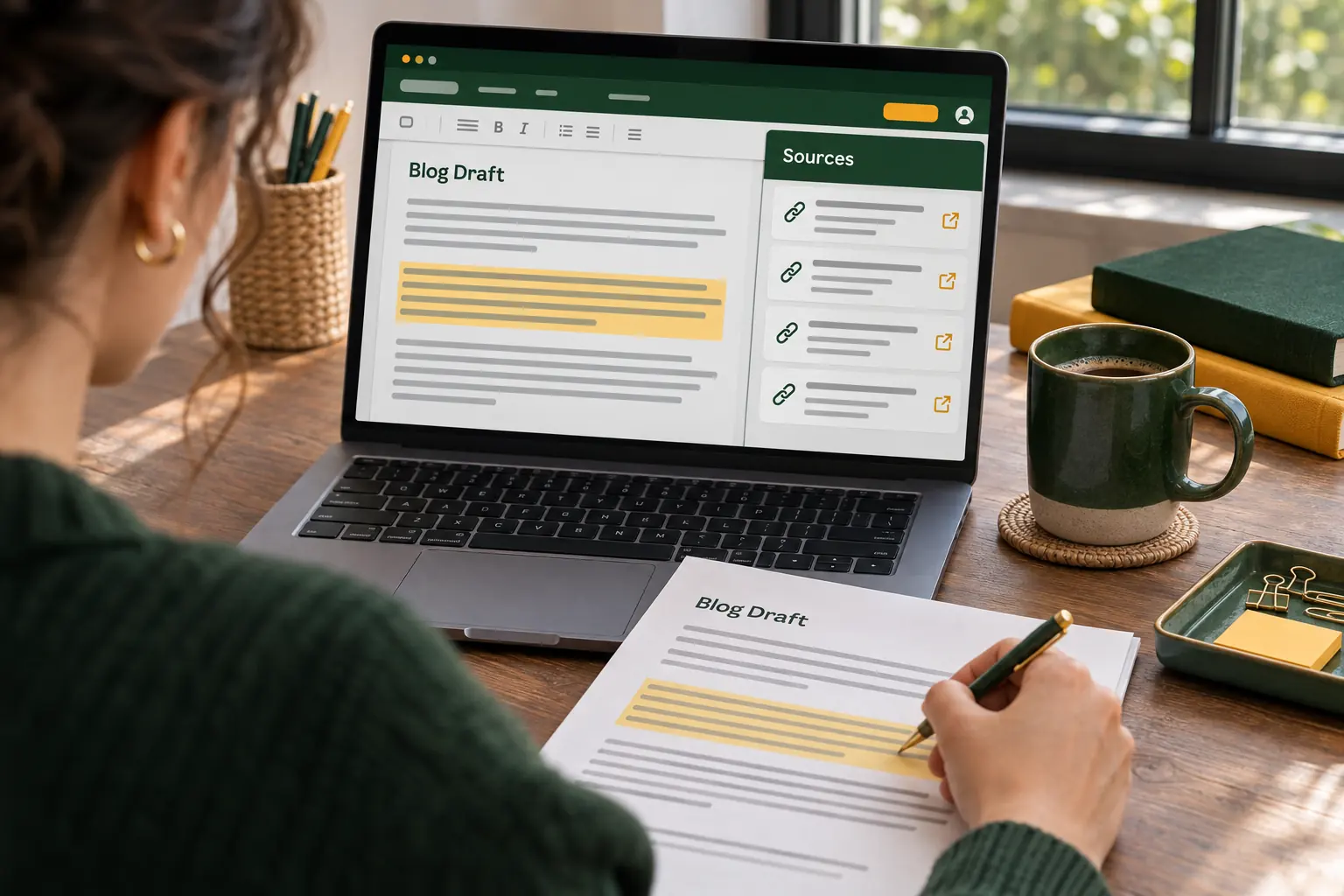
Cited sources are the second. Link the original guidance rather than another blog. For example, the CDC's guidelines for adults say adults need 150 minutes of moderate-intensity aerobic activity a week and muscle-strengthening activity on at least 2 days. A reader can click and check.
No medical claims and no promised results is the third. The FTC's health products guidance says objective health claims need competent and reliable scientific evidence, and that anecdotes and testimonials do not substantiate them. Describe what you did and what the sources say. Do not write that a plan will make anyone lose a set amount of weight.
Your own experience is the fourth. Say what you trained for, for how long and what you learned. Google's guidance on helpful, people-first content asks about expertise and first-hand experience, and for health topics that matters even more.
What makes a fitness post trusted by readers, Google and AI answers
Answer first and answer carefully. If the post is about how much exercise adults need, say the guideline and name the agency in the first paragraph.
Show the people behind it. Name the author and their qualifications. Name the reviewer and the date they checked it. Say who the plan is for and who should talk to a doctor first. Date the post and update it when the guidance changes.
Be modest about what you know. Describe what worked for you as your own experience, and avoid promising that it will work for anyone else. Readers and assistants both trust a page that states its limits.
PixelClaw sets up structured data for articles and FAQs from the first day, so the author and dates on the page can be read by search engines. The names and the dates must be real.
How PixelClaw fits a fitness blog
PixelClaw researches each topic by reading the pages that already rank and collecting the questions readers ask, then writes an outline and a draft. For a fitness blog that gives you the structure of a plan or an explainer, with common reader questions already in it.
You can guide one post at a time in the writing studio, where the outline can be edited before the draft is written. That is where you put in your own training and send the draft to your reviewer. Or you put topics in a queue and let Autopilot work through them at your plan's pace, which suits general habit and planning posts. Keep approval on for anything that touches health.
Every draft is scored out of 100 from 21 checks in five areas: SEO carries 30% of the score, AEO 20%, AIO 15%, GEO 15% and SXO 20%. Most failing checks come with a one-click fix. A draft under 60 is held back. Finished posts wait for your approval by default, and with automatic publishing switched on a post must score 77 or more to go live on schedule. The score measures how a post is built. It does not tell you whether health advice is correct.
Posts are published on a blog PixelClaw hosts for you, with sitemap.xml, robots.txt, llms.txt and structured data for articles and FAQs set up from the first day, or on an existing WordPress site through the PixelClaw plugin. Starter and higher plans can connect a custom domain and translate a post into eleven languages. PixelClaw makes a hero picture for each post it drafts. A personal blog can skip business details at setup, and a gym or studio can add its website so PixelClaw builds a business profile the owner approves.
How to choose fitness blogging software
Five questions help a fitness blogger choose a tool they can stand behind.
- Does it claim to replace a trainer or a doctor? Walk away from any tool that says so.
- Does it research and show where information came from? You need to be able to check each claim.
- Do you approve every post? Health advice must not go live unseen.
- Does it hold weak drafts back? A score with a publish bar keeps thin posts off the site.
- Can you edit the outline before the draft? Your reviewer's notes should shape the structure.
Start a fitness blog this week
Choose an audience and write one line about them, such as adults returning to exercise after a break. List the eight questions they ask most often. Cross out any that need a clinician and save them for later.
Create the blog and add the first safe question as a topic, for example how to build a habit or how much activity guidelines suggest. Let it research and draft, then add your own experience, link the original sources and send the draft to your reviewer. Fix the failing checks, approve the post and publish.
One post a week is enough. Our guides to autoblogging and to whether blogging is still worth it cover pace and results, and business blogging software is the page for a gym or coaching business.
- Fitness readers search for plans, form, recovery and habits, and a post that answers one question first gets the visit.
- Fitness blogs stall because each post needs the training, the photos, the sources and a careful read for claims.
- Software can research, outline, draft and publish, but it does not replace a qualified reviewer or your own coaching.
- Health content needs cited sources, a named author and a reviewer, and no medical claims or promised results.
- Say plainly who a plan is for and when to see a doctor, and never present a story as proof.
Frequently Asked Questions
Can AI write fitness blog posts?+
It can draft the structure, the background and the common questions. It is not a coach or a clinician, so anything about health must be reviewed by a qualified person and tied to cited sources. Add your own training experience and remove any claim you cannot support.
Do I need a qualified reviewer for a fitness blog?+
For anything beyond your own experience, yes. A certified trainer, a dietitian or a doctor should check advice on injuries, conditions, medication, diets and supplements. Name the reviewer and what they checked, so readers and search engines can see who stands behind the page.
How do I start a fitness blog?+
Pick a clear audience, such as beginners returning to exercise or runners training for a first 10K. List the questions they ask and write from what you have done yourself. Create the blog and publish a post for that audience, with sources for any factual claim.
What claims should a fitness blog avoid?+
Avoid medical claims, promises of weight loss or muscle gain and cures. The FTC says objective health claims need competent and reliable scientific evidence, and that testimonials and anecdotes do not provide it. Describe what you did and what the sources say, and stop there.
How do I cite sources in a health post?+
Link the original guidance, such as a public health agency or a peer-reviewed review, in the sentence it supports. Say when it was published and when you checked it. Do not link to another blog that makes the same claim without a source.
Sources
- Blogging Statistics 2026: What 1,042 Content Marketers Told Us About What Works — Orbit Media Studios (The average post takes 3 hours 20 minutes to write and runs 1,312 words.)
- Creating helpful, reliable, people-first content — Google Search Central (Asks who created the content, how, and why, and stresses first-hand experience and expertise.)
- Google Search's guidance about AI-generated content — Google Search Central Blog (Automation is fine when it serves people. Using it mainly to manipulate rankings is spam.)
- Physical Activity Guidelines for Adults — U.S. Centers for Disease Control and Prevention (Adults need 150 minutes of moderate-intensity aerobic activity a week and muscle-strengthening activity on at least 2 days.)
- Health Products Compliance Guidance — U.S. Federal Trade Commission (Objective health claims need competent and reliable scientific evidence, and anecdotes and testimonials do not substantiate them.)
Built & scored using PixelClaw.ai
More from this blog
Continue exploring autoblogging architecture, AI blog writing, and SEO / AEO / GEO playbooks.

Business Blogging Software: How a Blog Brings Customers to Your Business
What business blogging software does, why articles bring in customers who are already searching, and how it works for a local firm, a store, a SaaS company, an agency or a practice.
PixelClaw Editorial Team
Product and search team

Autoblogging in 2026: How to Run a Blog That Publishes Itself and Still Ranks
What autoblogging looks like when it works: a topic queue, research before writing, a score that holds weak drafts back, and editorial review before a draft reaches readers.
PixelClaw Editorial Team
Product and search team
AI Blogging Without the Slop: A Working Process for Posts People Trust
Where AI earns its place in a blog, where a person still has to step in, and a five-step process that turns AI drafts into posts worth putting your name on.
PixelClaw Editorial Team
Product and search team